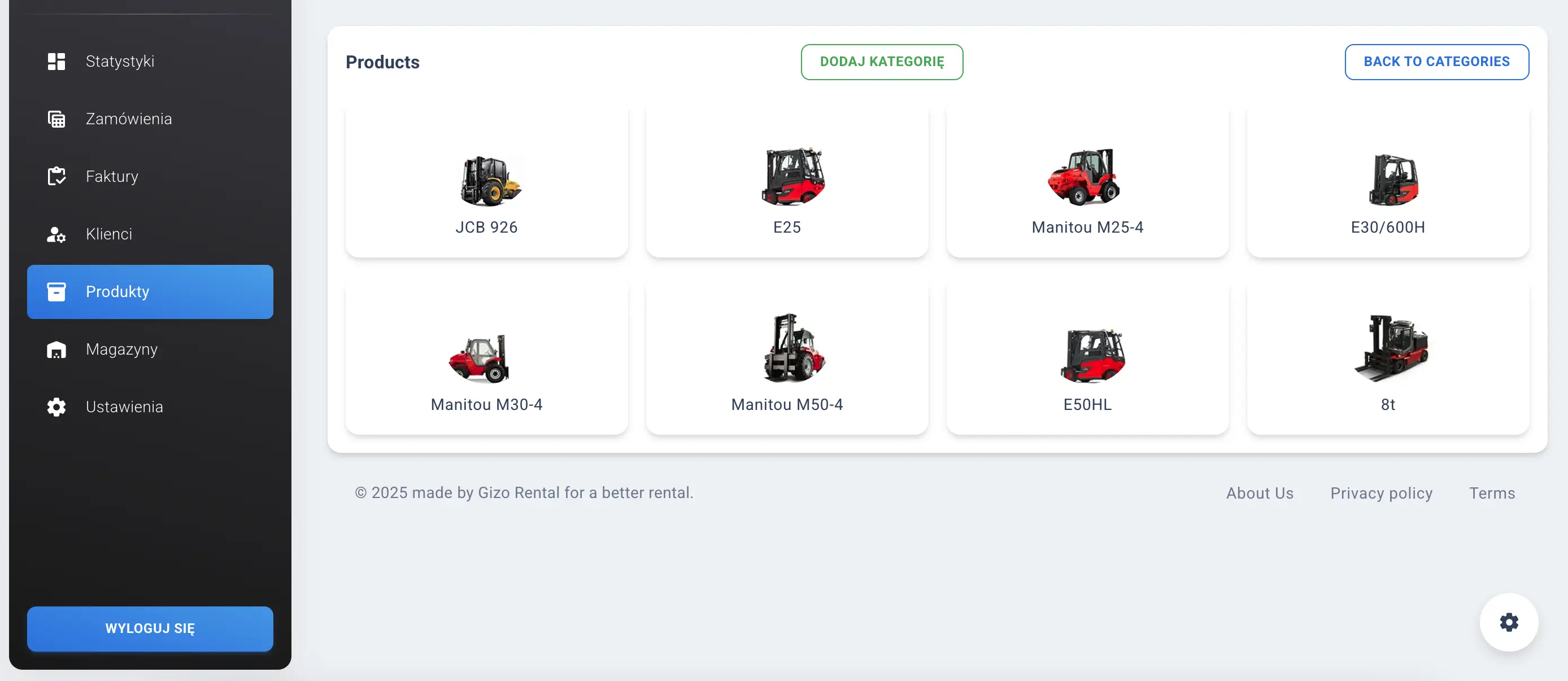
In today's world, digitalization is transforming almost every industry, and construction equipment rental is no exception. In response to increasing customer demands and market competition, Softech.app, a leader in business software development, websites, landing pages, and mobile applications, designed and implemented an innovative heavy-equipment rental management platform for a client in the aerial lift industry. The project's goal was to create an intuitive mobile application for iOS and Android that simplifies the rental process while offering advanced features such as dynamic pricing and a transportation cost calculation module. In this article, we detail the design, implementation, and technological aspects of this groundbreaking project that has revolutionized the heavy equipment rental approach.
Why a Heavy-Equipment Rental Management Platform?
Renting construction equipment, such as aerial lifts or heavy machinery, is a complex process requiring precise management of availability, pricing, and logistics. Traditional methods based on manual calculations and paper forms are time-consuming and error-prone. Our client—a company in the aerial lift rental industry—recognized the need for a modern solution that:
- Allows customers to quickly and conveniently rent machines via smartphones.
- Ensures full pricing transparency through dynamic pricing models.
- Automates transport cost calculation for greater clarity and convenience.
Softech.app took on this challenge, creating a comprehensive platform that not only meets these needs but also stands out from the competition with custom technological solutions.
Phase 1: Client and Market Needs Analysis
The first step was a thorough analysis of the client's needs and the specifics of the construction equipment rental industry. The Softech.app team conducted a series of workshops with the client to identify key business goals and functional requirements. The client clearly defined their priorities:
- Developing an intuitive mobile application to simplify the rental process.
- Implementing a flexible dynamic pricing system.
- Automating transport cost calculations for improved transparency and convenience.
At the same time, we analyzed the heavy-equipment rental market, allowing us to understand trends and end-user expectations. The results were clear: users expect personalization, speed, and easy access to services. This confirmed that the platform must offer unique functionalities to stand out in the competitive landscape.
Phase 2: System Architecture Design
After gathering requirements, we proceeded with designing the system architecture. Our goal was to create a scalable, secure, and easily expandable solution. Key technological decisions included:
- Microservices architecture: A modular approach ensured that each system component (e.g., pricing, transport calculation, order management) operates independently, facilitating scaling and updates.
- Cloud technologies: We used cloud solutions (e.g., AWS or Azure) to ensure high availability, reliability, and data security.
- Backend: The system was implemented in Node.js ensuring stability and performance.
- Frontend: The mobile application was built in React Native, allowing simultaneous deployment on iOS and Android at lower costs and shorter development time.
This architecture provides flexibility and enables integration with the client’s existing systems, which was one of the critical requirements.
Phase 3: Custom Solutions for Dynamic Pricing
One of the biggest project challenges was designing a dynamic pricing system that adjusts rental prices in real time based on various factors. Our team developed an advanced algorithm that considers:
- Machine size: Larger and more expensive machines, such as high-reach lifts, have higher rental rates due to their value and maintenance costs.
- Rental duration: The system automatically applies discounts for longer rental periods, encouraging extended bookings.
- Order specifications: Additional services like insurance, on-site servicing, or machine operators are optional and affect the final price.
- Seasonality: Prices increase during peak demand periods (e.g., spring/summer) and decrease in the low season.
How does it work?
The user selects a machine in the mobile app, specifies the rental period and additional options, and the algorithm calculates the price in real time, displaying it transparently. This allows customers to see exactly what they are paying for, building trust and increasing satisfaction.
Phase 4: Transport Cost Calculation Module
Transporting heavy construction equipment is a crucial rental process element that generates additional costs. To help customers plan their budgets, we developed an advanced transport cost calculation module that analyzes:
- Machine size: Larger machines require specialized transport vehicles, increasing costs.
- Number of machines in an order: Transporting multiple machines simultaneously is more cost-effective.
- Customer address: The construction site location determines distance and route difficulty.
- Distance: Costs increase proportionally to the distance between the branch and the delivery site.
- Fulfilling branch: The system selects the nearest client branch to minimize transport costs.
Technology behind the module
The module integrates with Google Maps API, allowing precise route and cost calculations based on real-time geographic data. The user enters the delivery address in the app, and the system automatically calculates the optimal transport cost, considering all variables.
Phase 5: Mobile Application Implementation
The mobile application was the project's core, designed with simplicity and functionality in mind. Key features include:
- Machine catalog: Intuitive browsing of available lifts and machines with filters (e.g., size, availability).
- Dynamic pricing: Automatic price generation after selecting a machine and rental parameters.
- Transport cost calculation: Estimated delivery cost displayed upon entering an address.
- Booking and payment: Fast booking process integrated with secure payment gateways.
- Order tracking: Ability to monitor rental status and machine location in transit.
The user interface (UI) was designed with a focus on UX—simplicity and intuitiveness. The app runs smoothly across different devices thanks to React Native optimization.
Phase 6: Testing and Deployment
Before launching the platform, we conducted comprehensive testing:
- Unit testing: Verifying each component individually.
- Integration testing: Ensuring seamless interaction between modules.
- Load testing: Simulating high traffic to confirm scalability.
- UX/UI testing: Evaluating usability with a test group.
After completing the tests, the platform was deployed to production, and Softech.app provided technical support and monitoring to respond quickly to any issues.
Phase 7: Client Results and Benefits
Platform implementation delivered measurable benefits:
- Improved customer service: The intuitive app increased user satisfaction.
- Process efficiency: Automation saved employees time.
- Competitive advantage: Unique features attracted new customers.
- Scalability: The system is ready for further expansion and integrations.
Conclusion: Digital Transformation with Softech.app
The heavy-equipment rental management platform project demonstrates how modern technologies can transform traditional industries. Dynamic pricing and the transport cost calculation module are just some of the innovations we introduced to meet the needs of our client and their users. If your company needs a similar solution—business software, mobile applications, or websites—contact us!
Visit Softech.app to learn how we can support your digital transformation.
Softech.app – Your Partner in Technological Innovation!