Overview
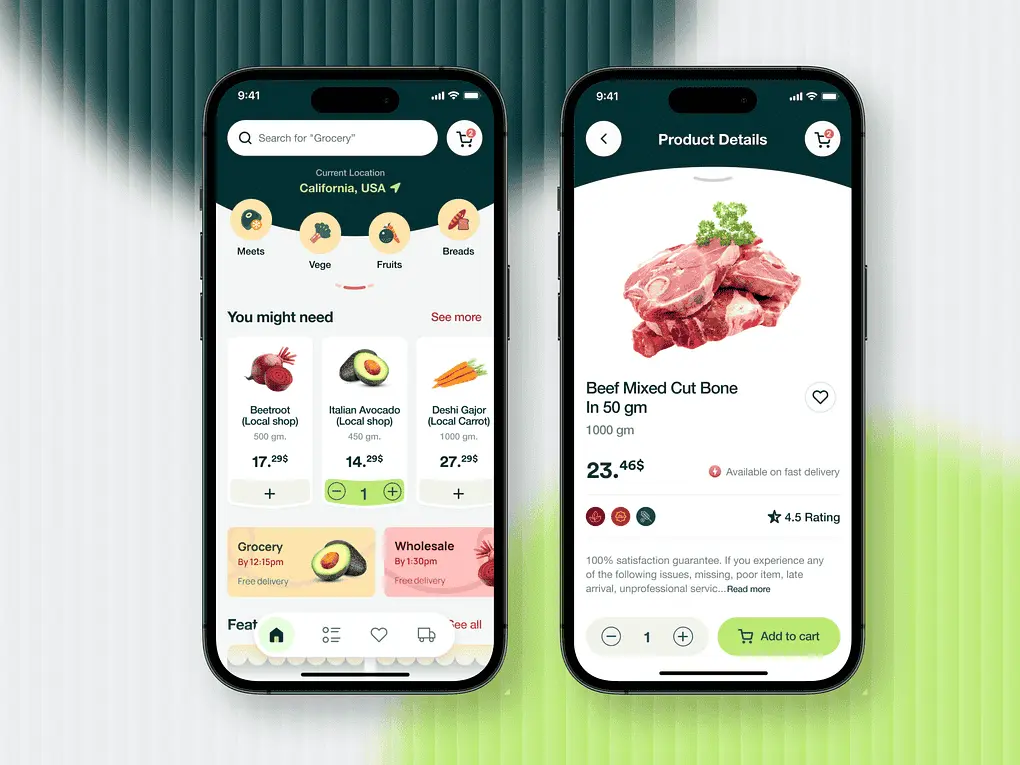
We designed and implemented a complete quick commerce platform for ordering groceries with delivery within one hour. The system includes mobile apps for customers and couriers, logistics and dispatch modules, and real-time operational coordination.
Problem
Classic ecommerce and marketplace platforms are not adapted to the same-hour delivery model. Challenges included limited control over picking time, inflexible delivery slots, insufficient courier optimization, and poor support for real-time operations.
Solution
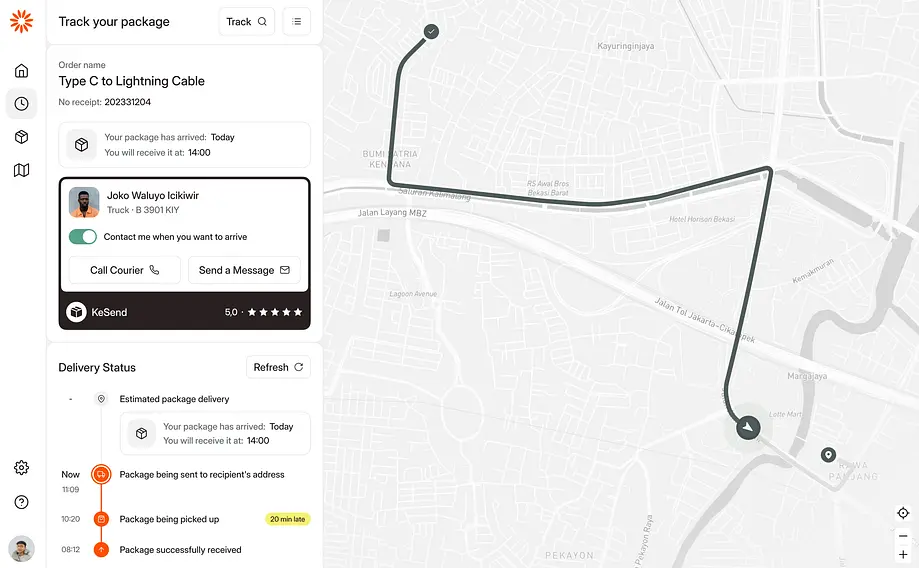
We built a dedicated quick commerce platform based on an event-driven architecture. The system automatically assigns orders to the nearest fulfillment point or dark store, calculates delivery windows, optimizes courier routing in real time, and coordinates customer, courier, and operational flows across mobile and web interfaces.
Business impact
The platform significantly reduced order fulfillment time, increased the number of orders delivered within one hour, and lowered unit delivery cost thanks to better courier and slot utilization.
Key metrics
Visual evidence


Technology
Implementation timeline
1. Discovery & operational logic
Analysis of fulfillment rules, delivery windows, and courier operations
2. UX/UI and customer flow
Design of ordering, tracking, and courier experiences
3. Core logistics engine
Dispatching, slotting, routing, and batching
4. Mobile apps & launch
Customer and courier apps plus operational rollout
5. Optimization & scale
Further work on performance, SLA, and expansion
Anonymized client testimonial
“Thanks to the dedicated platform, we are able to deliver in under an hour without overloading the operations team. The system scales together with the business.”
FAQ
How is quick commerce different from traditional ecommerce?
Quick commerce is built around very fast fulfillment, often within one hour, which requires different operational logic, routing, slotting, and inventory coordination than traditional ecommerce.
Can the system support dark stores and local fulfillment points?
Yes. The architecture was built to support local fulfillment nodes and assign orders dynamically based on operational context.
Why is real-time architecture important here?
Because quick commerce depends on constant synchronization of orders, slots, couriers, and ETA data. Without real-time coordination, the SLA quickly breaks down.
Can such a platform scale to additional cities or stores?
Yes. The product architecture was designed to support expansion into additional operational zones and locations.