We build mobile applications your customers and teams can use.
From the first idea and UX design to iOS and Android development, backend integrations and App Store or Google Play release. We build customer-facing apps, tools for field teams and mobile extensions of existing platforms.
Have an idea, an existing web platform or a team that needs a mobile tool? Tell us what users should be able to do and we will help define the right first step.
One product state.
Mobile is a surface. Backend, sync and operations keep the experience coherent.
Authenticated
Synced
Observable
iOS / Android
Product API
Push / deep links
Operations
Product surface
iOS + Android
One product model across two mobile ecosystems.
Core stack
React Native
Modern cross-platform delivery with access to native capabilities.
System layer
Mobile + backend
Accounts, data, workflows and operations remain part of one domain model.
Production
Build → release → observe
Delivery continues through testing, store release and production monitoring.
What kind of mobile app do you need?
We can help define the users, core features and a sensible first delivery scope.
Customer app
Bookings, orders, accounts, payments and notifications on mobile.
Employee tool
Tasks, photos, location, measurements and field workflows, including offline use.
Mobile extension of your platform
Add iOS and Android to an existing web product without duplicating business data.
Mobile in production
Proof should match the capability being sold.
Our strongest mobile work combines the application with business state, payments, documents, location and operator workflows — not a standalone set of screens.
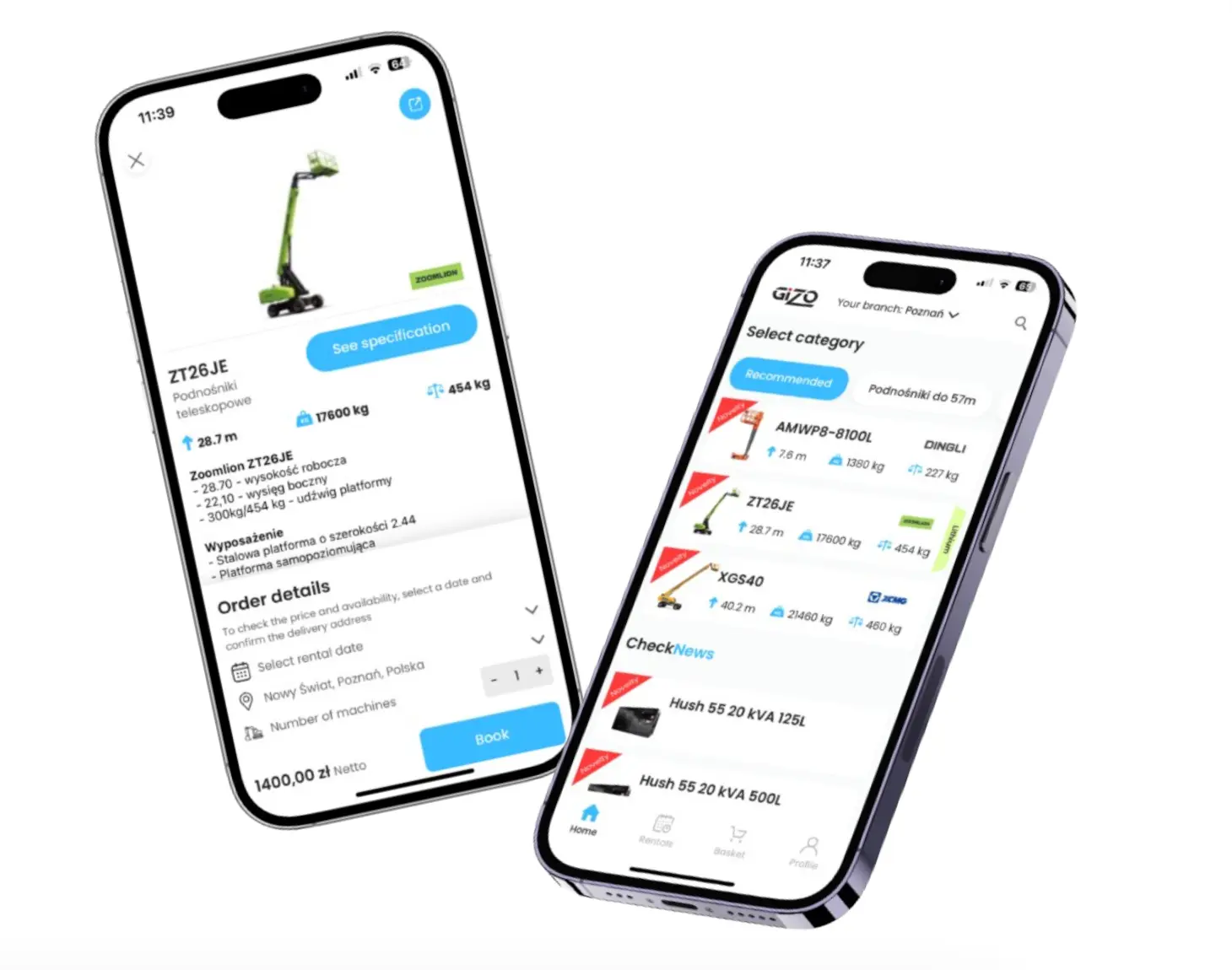
Gizo Rental — mobile app and equipment rental operations system
A production mobile and web ecosystem supporting a multi-branch B2B equipment rental lifecycle: technical search, branch-aware availability, transport calculation, company verification, documents, e-signature, payment and operational status through return and settlement.
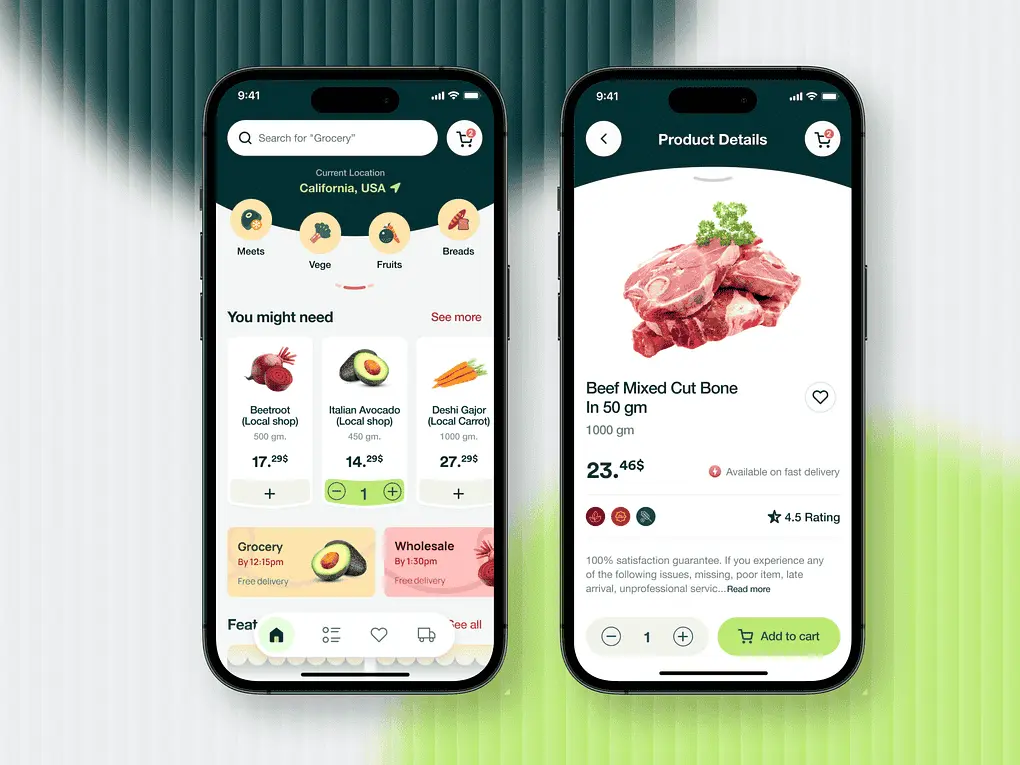
CONSUMER / LOGISTICS
Quick Commerce — same-hour grocery delivery
A mobile-first transaction flow connecting product discovery, ordering, delivery state and operational coordination.
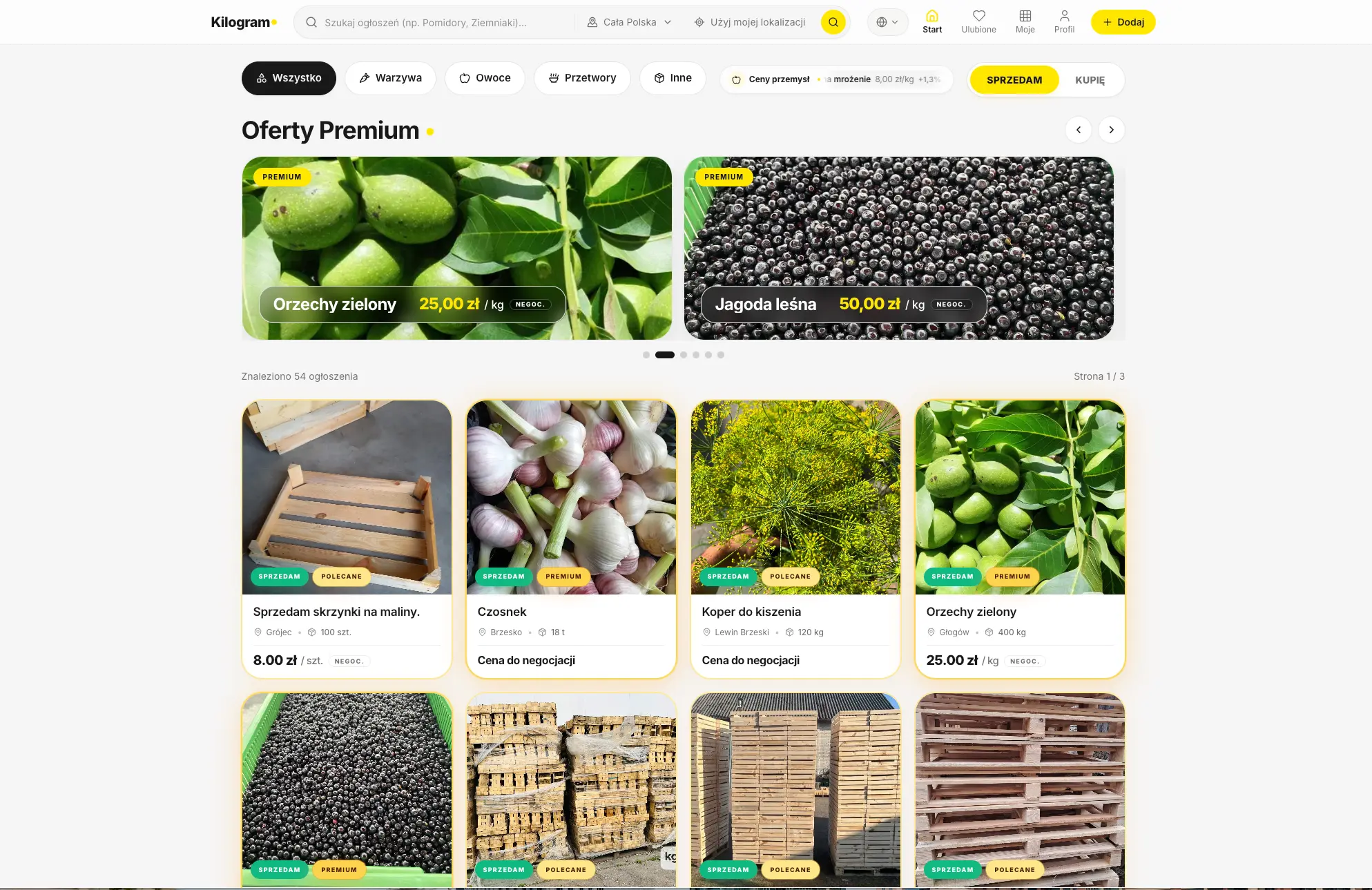
MARKETPLACE / AI
KILOGRAM — marketplace, mobile app and AI system
A live marketplace ecosystem where React Native, the web platform, NestJS API, payments, notifications and controlled AI workflows share one domain model.
Explore technical details and implementation
Three delivery models
Mobile is not one type of product.
A consumer application, a mobile extension of an existing platform and a field operations tool may all use React Native — but their architecture, failure modes and product priorities are different.
MODEL A
Mobile-first digital product
A mobile application is the primary customer experience and the backend is designed around its user journeys, growth loops and transaction state.
BEST FOR
Marketplaces, booking, membership, consumer services, communities and new digital products.
User
Mobile app
Product API
Business logic
Operations
MODEL B
Existing platform → mobile
A new iOS and Android surface joins an existing SaaS, marketplace or business platform without creating a second source of truth.
BEST FOR
SaaS, B2B portals, commerce systems and products adding mobile to a working web platform.
Existing platform
Shared backend
Mobile app
Same domain model
Shared operations
MODEL C
Field & operational mobile system
The application supports work away from a desk, where device capabilities, unreliable connectivity and precise operational state matter more than marketing screens.
BEST FOR
Rental, logistics, field service, sales, warehouses, inspections and distributed teams.
Operator
Local state
Sync queue
Business backend
Operations dashboard
We choose the mobile architecture from the operating model first. Technology follows the workflow, not the other way around.
Product architecture
The mobile app is only one interface of the product.
Screens are visible. Product state, security, data consistency, integrations and operations are what make the experience reliable. We design those layers together.
01
Mobile experience
Navigation, interaction model, accessibility, device capabilities and responsive/adaptive behavior.
02
Identity & permissions
Authentication, session lifecycle, roles, biometrics and authorization rules.
03
Product API
Typed contracts, validation, idempotent actions and network-aware client behavior.
04
Business state
Orders, bookings, tasks, payments, documents and lifecycle rules owned by the backend.
05
Engagement & integrations
Push notifications, deep links, maps, payments, analytics and third-party systems.
06
Operations
Admin tooling, logs, customer support context, observability and recovery workflows.
Technology decision
Why React Native — and when not to use it.
Cross-platform is valuable when it matches the product. We do not treat React Native as a mandatory answer to every mobile requirement.
React Native
A strong default for products that need iOS and Android, regular iteration and a large shared product surface while retaining access to native platform capabilities.
Usually the better fit when
iOS and Android share most product logic and user journeys
time-to-market and one coordinated product team matter
mobile works alongside a shared API, web app or admin platform
the product needs camera, location, notifications, payments or other supported native capabilities
the app will evolve continuously after launch
Platform-specific / native
Sometimes the product should deliberately use Swift, Kotlin or a custom native module for a capability that sits close to hardware or platform behavior.
We evaluate native implementation when
hardware or low-level platform APIs are central to the product
a performance-critical path cannot be expressed safely through the shared layer
the iOS and Android experiences intentionally diverge
a vendor SDK or platform feature has a stronger native integration path
a specific module can stay native while the rest of the product remains React Native
The decision is architectural, not ideological: shared code where it creates leverage, native code where the product requires it.
Production engineering
The difficult mobile work happens between the happy paths.
A polished interface is only the visible layer. Production quality depends on how the application behaves with weak connectivity, background transitions, duplicate actions, permission changes, device differences and partial failures.
Offline & synchronization
Connectivity should not become a single point of failure for field and repeat-use workflows.
Local state and operation queue
Retry and idempotency
Conflict resolution
Background synchronization
Server-authoritative reconciliation
Push, deep links & lifecycle
Notifications are connected to business events, user preferences and the destination state inside the product.
Event-driven notifications
Preference and eligibility rules
Deep-link routing
Foreground/background handling
Delivery and action analytics
Performance engineering
We treat startup, rendering, network behavior and memory as architecture concerns rather than late-stage polish.
Startup and navigation latency
List virtualization
Caching and request strategy
Image/media pipeline
Native module boundaries
Security, privacy & reliability
The application is designed around permissions, sensitive data, session lifecycle and observable production behavior.
Secure session handling
Biometric and device authentication
Privacy-aware permissions
Crash and error monitoring
Audit-friendly backend events
Release engineering
Shipping mobile software is part of the product.
We design a repeatable path from development build to production instead of treating App Store and Google Play submission as a final manual task.
DEV
Development builds
Native-capability testing on simulators and real devices with controlled development environments.
PREVIEW
Preview & stakeholder QA
Shareable internal builds, environment separation and a predictable acceptance path.
TEST
TestFlight / Play tracks
Release candidates move through platform testing channels before public distribution.
SHIP
Store submission
Build signing, submission workflow, metadata readiness and release coordination.
OBSERVE
Monitor & improve
Crash reporting, product analytics, rollout observation and controlled follow-up releases.
PRODUCTION READINESS
Production readiness is broader than a successful build.
Store review, privacy, permissions, stable backend access, device coverage and a supportable release process are planned before launch.
Delivery model
From operating model to production release.
The process reduces uncertainty before implementation and keeps product, backend and mobile decisions connected through delivery.
01 / DISCOVER
Product & workflow discovery
Map users, jobs-to-be-done, business states, device context, constraints and the role of mobile in the wider product.
Output
Product model + delivery scope
02 / ARCH
Architecture & UX flows
Define API contracts, navigation, local/server state, integrations, offline needs, permissions and platform-specific boundaries.
Output
Architecture + interaction flows
03 / BUILD
Mobile + backend implementation
Develop the mobile surface and required backend capabilities as one coordinated system with automated quality checks.
Output
Working product increments
04 / VERIFY
Device, lifecycle & failure testing
Test real devices, permissions, connectivity changes, background behavior, deep links, notifications and critical business scenarios.
Output
Release candidate
05 / RELEASE
Distribution & production
Prepare store delivery, monitoring, analytics, operational ownership and the first post-launch iteration loop.
Output
Production release + runbook
Technology architecture
A stack for the whole mobile product lifecycle.
Tools are selected per product, but the architecture normally spans mobile runtime, backend, device integrations, delivery and observability.
MOBILE
Application runtime
Cross-platform product surface with native integration where required.
API
Backend & domain
Product state, authorization, workflows, integration orchestration and data contracts.
DEVICE
Native capabilities
Capabilities connected to product intent rather than scattered SDK calls.
DELIVERY
Build & distribution
Repeatable environment, signing, build, testing and store submission workflows.
OPS
Production intelligence
Signals required to diagnose product and technical behavior after release.
Commercial paths
Choose the mobile engineering path from the constraint you already know.
The core Mobile Product Engineering service stays broad. These focused paths are for teams that already know the delivery constraint or the product stage they need to solve.
RN / DELIVERY
React Native App Development
Production iOS and Android engineering with React Native, Expo/EAS, native modules, backend integration and release ownership.
OFFLINE / FIELD
Offline-first Mobile Development
Field and operational products with local persistence, durable operation queues, idempotent sync and explicit conflict handling.
MVP / VALIDATE
Minimum Value Product
If the business hypothesis and scope still need validation, start with the existing MVP service instead of creating a second mobile-specific MVP offer.
Mobile engineering knowledge
Decision guides for teams preparing a mobile product.
Use the pillar guide for the full architecture, then go deeper into framework choice, release engineering and offline behavior.
PILLAR / MOBILE
How to Build a Production Mobile App in 2026
Architecture, React Native, backend state, device capabilities, release engineering and production operations in one guide.
DECISION / RN
React Native vs Native iOS & Android
A product and architecture decision framework instead of a generic cross-platform comparison.
DELIVERY / EAS
Expo & EAS Production Workflow
Development builds, preview, TestFlight, Play tracks, submission and update strategy.
ARCH / OFFLINE
Offline-first Mobile Architecture
Local state, operation queues, idempotency, synchronization and conflict handling for real-world workflows.
COST / 2026
How Much Does It Cost to Build a Mobile App?
Existing Softech planning guide covering mobile product scope, complexity and delivery cost drivers.
FAQ
Questions that should be answered before mobile development starts.
The right answer depends on product behavior, existing systems and operational constraints — not only the number of screens.
Yes. For many products we use React Native to deliver a coordinated iOS and Android experience from one product architecture. When a requirement is better served by platform-specific code, we can introduce native modules or a native implementation for that area.
Yes, where it fits the project. Expo and EAS can support development builds, cloud builds, store submission and update workflows for production React Native products. The exact setup depends on native dependencies, release policy and infrastructure requirements.
Yes. We normally keep one authoritative backend and domain model, then design mobile-specific API contracts, synchronization, permissions, notifications and UX around that existing system.
Yes, but offline behavior must be designed explicitly. We define which actions may happen locally, how they are queued, when they synchronize, how conflicts are resolved and which state remains server-authoritative.
We support build configuration, signing, internal testing, TestFlight / Google Play testing tracks, submission workflows and production readiness. Store approval remains subject to Apple and Google policies.
We evaluate native implementation when hardware integration, platform APIs, performance-critical behavior or deliberately different iOS and Android experiences are central to the product. Native modules can also coexist with a React Native application.
Mobile architecture discovery
What are you actually building?
Choose the closest model. The discovery brief will preserve that context so we can discuss the right architecture instead of starting from a generic feature list.
Consumer product
Marketplace, booking, membership, community or repeat-use customer app.
Operational app
Field service, rental, logistics, warehouse, inspections or distributed teams.
Existing platform → mobile
Add iOS and Android to an existing SaaS, B2B or web product.
Validate as an MVP
If demand and scope are still uncertain, start with Softech's existing MVP service before expanding mobile engineering.
The same problem in a specific business context
Explore Softech local paths that extend this topic with delivery scope, operating problems and relevant first-party case studies.