Short answer
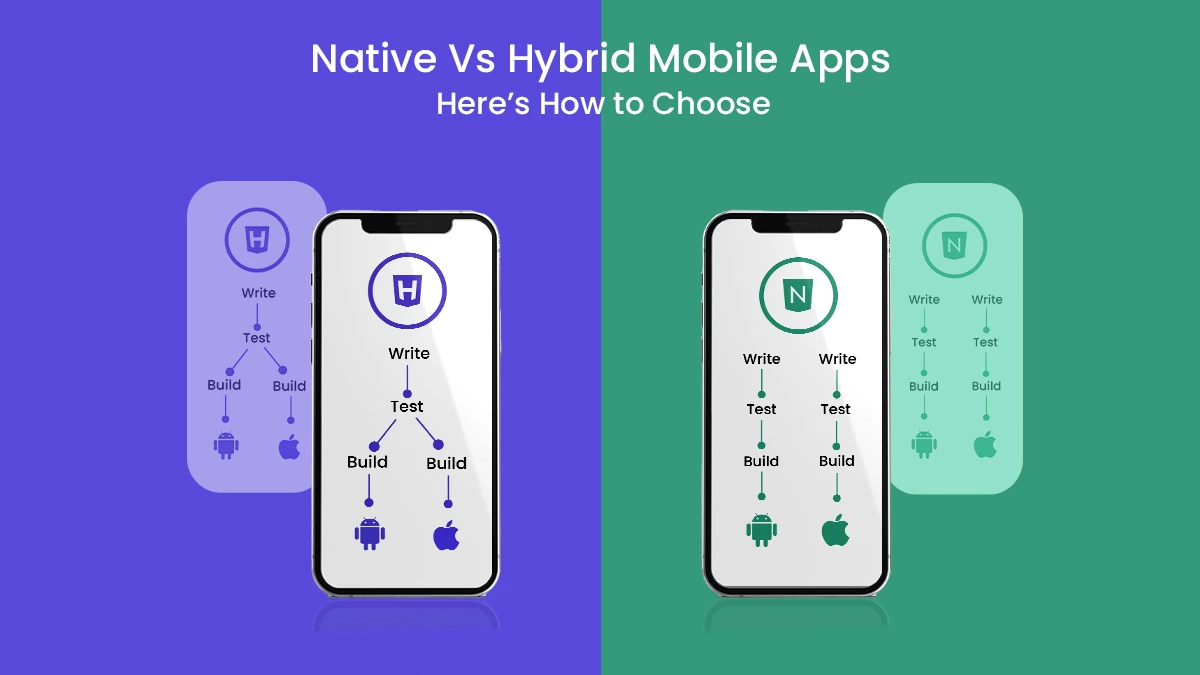
React Native is usually the better product choice when iOS and Android share the same business model, backend and most user journeys. Native Swift/Kotlin is usually justified when platform-specific behavior, hardware integration or a performance-critical module is central to the product.
The strongest architecture is often hybrid in the literal engineering sense: a shared React Native product surface with native modules only where they create measurable value.
Decision 1: how much product logic is genuinely shared?
If accounts, orders, bookings, payments, content, workflows and most screen behavior are conceptually the same on both platforms, maintaining two separate application stacks can duplicate product work. React Native lets one team own that shared surface while still integrating platform APIs.
Decision 2: where is the performance risk?
Do not ask whether “React Native is fast”. Identify the specific workload: startup, long lists, animation, media, maps, camera processing, Bluetooth, background work or another native integration. Many product screens are not bottlenecked by framework choice at all; network behavior, image strategy and unnecessary rendering are more common causes.
Decision 3: are iOS and Android intentionally different?
Platform conventions matter. Shared code should not force identical interfaces where users expect native behavior. A cross-platform architecture can still branch visual or interaction behavior where the product requires it.
Modern React Native changes the old comparison
Current React Native uses the New Architecture and modern releases continue removing legacy architecture paths. This makes older comparisons based on the historical bridge increasingly misleading. Evaluate the framework against the current runtime and the actual native modules you need.
When React Native is a strong fit
- One product team owns iOS and Android.
- A shared backend/domain model already exists.
- The product needs frequent coordinated releases.
- Native capabilities are common product integrations rather than the entire value proposition.
- Hiring and long-term maintenance benefit from one TypeScript-oriented stack.
When native deserves serious consideration
- Specialized hardware interaction dominates the workflow.
- A critical vendor SDK has materially better native support.
- Extremely specialized graphics/media processing is core to the product.
- The platforms intentionally have different feature sets or release organizations.
Cost should include ownership, not only first release
Compare two-year product ownership: parallel feature work, QA across platforms, release coordination, backend changes and maintenance. A slightly faster first native prototype can still be more expensive if every product change must be implemented twice.
Softech decision rule
We default to product architecture first. If shared code makes the organization faster without hiding important native constraints, React Native is a strong choice. If one part needs Swift or Kotlin, we isolate that boundary instead of turning framework preference into an all-or-nothing decision.