Build mobile workflows that do not stop when connectivity does.
We design offline behavior per business operation: what can happen locally, what must be queued, how retries stay idempotent, which state wins after reconnect and what operators need when synchronization fails.
Offline-first is not the same as caching screens. A production design needs explicit local authority, durable operations, retry rules, conflict policy and server reconciliation.
COMMERCIAL / MOBILE MAP
product model
mobile layer
backend state
release / operations
When offline-first is justified
Use offline architecture when completing the job matters more than the network being available.
The design cost is justified when field work, delivery, rental, inspection or operational capture must continue through weak or intermittent connectivity.
01 / CONTINUE
Let critical work continue locally
Define which commands and data must remain available on the device when the API is unreachable.
Outcome
Work does not stop
02 / REPLAY
Queue intent, not accidental HTTP retries
Persist business operations with stable identifiers so reconnect can replay them safely and the server can reject duplicates.
Outcome
Idempotent recovery
03 / RESOLVE
Make conflicts an explicit product rule
Choose server-wins, client-wins, merge or manual review per entity instead of hiding conflicting edits behind a generic sync flag.
Outcome
Predictable state
Synchronization architecture
Offline-first is a state machine between device intent and server truth.
We model local storage and synchronization as product infrastructure with observable states rather than a best-effort network helper.
Local product state
Persist the data and workflow context required to keep the user productive.
Operation journal
Store business intent with stable IDs, timestamps and retry metadata.
Sync engine
Detect connectivity, order work, retry safely and expose synchronization state.
Authoritative API
Validate permissions, deduplicate commands and apply domain rules centrally.
Conflict policy
Resolve stale edits and competing changes according to explicit business rules.
Operations & telemetry
Surface stuck queues, failed sync, version mismatch and recovery paths to support teams.
Engineering scope
Offline reliability is designed operation by operation.
We identify which workflows truly need resilience and avoid turning the entire app into an unnecessarily complex distributed database.
Offline capability map
Classify every important workflow by required behavior without connectivity.
Read-only cached
Queue locally
Online-only
Local data & queue
Design durable local state around product entities and user intent.
Local persistence
Stable operation IDs
Retry metadata
Sync & conflict rules
Make replay and reconciliation safe when state changes on multiple sides.
Idempotency
Version / timestamp strategy
Manual review where required
Operational visibility
Give users and operators enough context to understand pending, synced and failed work.
Sync status UX
Telemetry and alerts
Recovery / replay tooling
Operational proof
Offline thinking matters most in products that live outside perfect office connectivity.
Our operational mobile work combines field state with a central backend and operator tooling so business processes remain traceable across devices and locations.
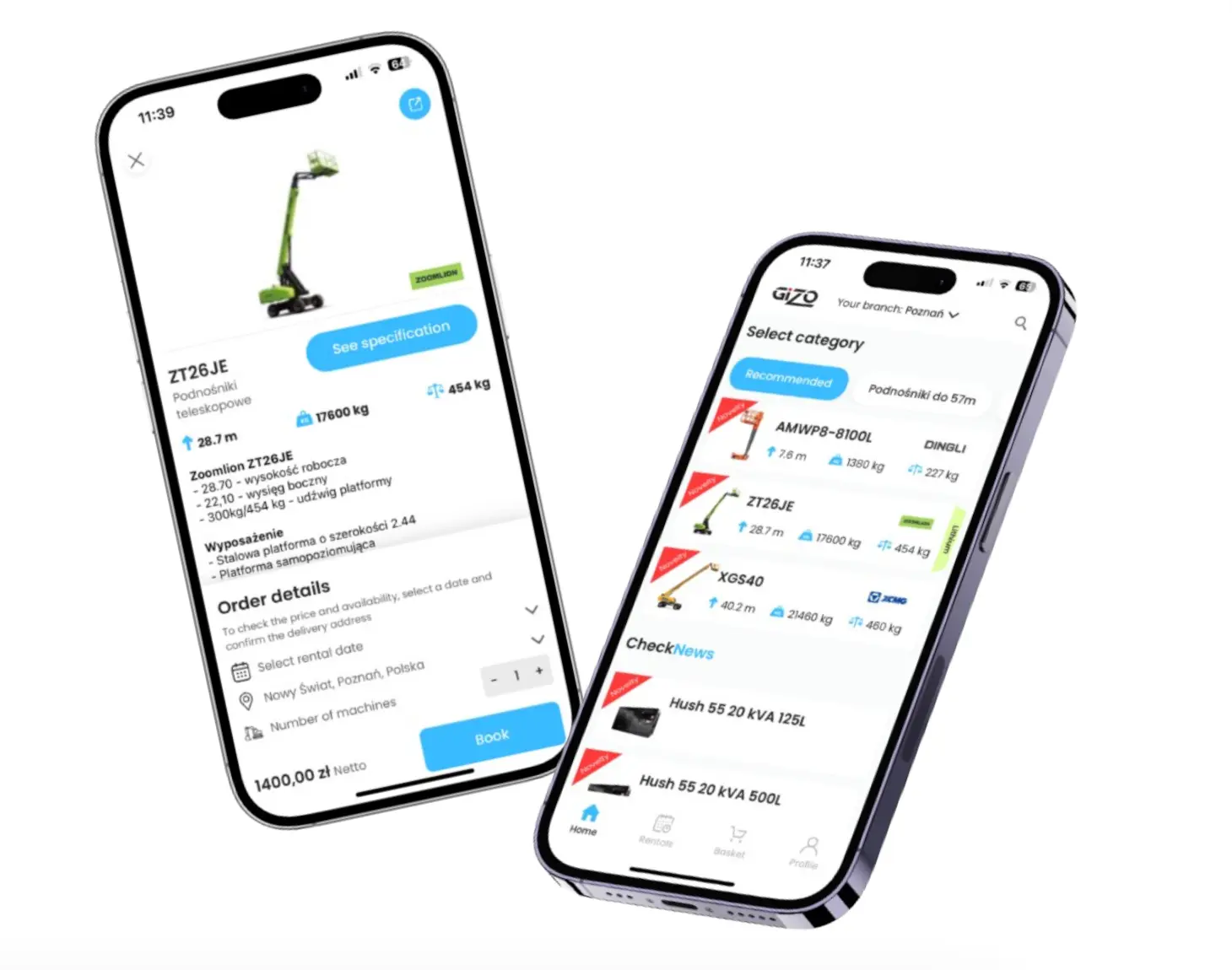
Gizo Rental
Multi-branch mobile rental workflows combine geolocation, customer verification, documents, payment and operational state in a product used around physical equipment and locations.
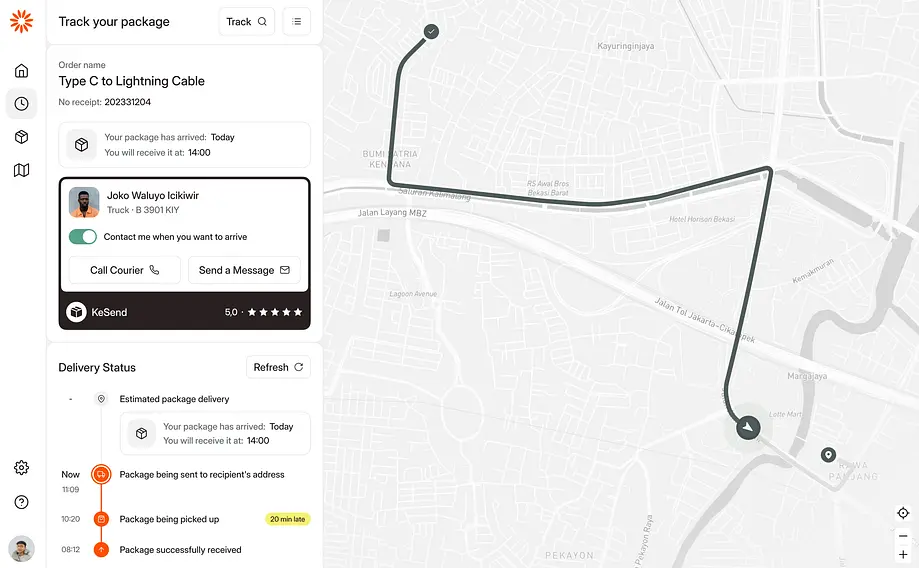
Foodeli
A last-mile operations platform connecting dispatch, branch tools, partner channels and a courier application through one order and delivery model.
Architecture guides
Go deeper into synchronization before turning requirements into screens.
PILLAR
Offline-first Mobile App Architecture
Local state, queues, idempotency, sync and conflict handling in one technical guide.
ReadSYSTEM
How to Build a Production Mobile App in 2026
How offline behavior fits the wider mobile product, backend and release architecture.
ReadDECISION
React Native vs Native iOS & Android
Framework choice for operational products with native and performance constraints.
ReadRelated paths
Offline-first is one product constraint, not a separate business strategy.
Use the wider Mobile Product Engineering service when architecture is still open, or the MVP service when the business model itself needs validation first.
MOBILE / CORE
Mobile Product Engineering
For complete mobile architecture spanning UX, backend state, native capabilities and release operations.
Explore the core serviceRN / DELIVERY
React Native App Development
For teams that have already chosen cross-platform delivery and need production iOS/Android engineering.
Explore React NativeMVP / VALIDATE
Minimum Value Product
For teams that first need to validate the product hypothesis and smallest useful workflow before investing in deeper offline infrastructure.
Explore MVP launchFAQ
Offline-first questions that need product-level answers.
The right strategy depends on which actions must work offline and which system remains authoritative.
No. We classify workflows. Some can use cached reads, some need durable local commands, and some should remain online-only because their correctness depends on current server state.
Commands receive stable operation identifiers and the backend handles them idempotently. Network retry should never be able to create a second business transaction by accident.
We define conflict policy per entity: server-wins, client-wins, version checks, field-level merge or manual review. The rule must follow business risk rather than one global technical default.
Yes, but we first audit current state management, API semantics and operations. A staged approach usually adds resilience to the highest-value workflows before expanding coverage.
Yes. The important architecture sits in local persistence, operation queues, API semantics and conflict policy. Native integrations can be added where hardware or background execution requires them.
Offline architecture discovery
Show us what users must complete when the network disappears.
We will map local authority, queued operations, server reconciliation, conflicts and support visibility into a production architecture before implementation starts.