Smart contracts built as production infrastructure.
We design smart contracts together with the backend, indexing, permissions, monitoring and operational interfaces required to run blockchain products in production — not as isolated Solidity files.
Architecture, implementation and operational readiness in one delivery process.
Delivery scope
End-to-end
Protocol logic, backend services, indexers, administration and monitoring.
Engineering model
Audit-ready
Testing, threat modelling, permissions and preparation for external review.
Product layer
On-chain + off-chain
One architecture connecting contracts with data, users and operations.
Engagement
Build or extend
New protocols, existing systems, integrations and contract modernisation.
What smart contract development includes
The contract is only one layer of the product.
Smart contract development includes protocol architecture, Solidity implementation, permissions, automated testing, backend integration, event indexing, operational monitoring and preparation for independent security review.
A production smart contract is not an isolated Solidity file. It is one component of a wider system that must remain observable, maintainable and controllable after deployment.
01 / LOGIC
Protocol and contract architecture
We translate product rules into explicit state transitions, permissions, failure conditions and upgrade strategies before implementation begins.
02 / CHAIN
Solidity implementation and testing
Contracts are developed with unit, integration and invariant testing, with special attention to access control, accounting logic and edge cases.
03 / DATA
Events, indexing and backend integration
On-chain events are connected with indexers, APIs, databases and application interfaces so users and operators can work with reliable product state.
04 / OPS
Administration and operational controls
We design the tools needed to manage roles, configuration, transactions, alerts and exceptional situations without direct intervention in production code.
Where blockchain products usually break
The expensive failures happen between the contract and the product.
A contract can compile and still create operational, security or product risk. We design the complete execution environment around the protocol so critical assumptions are visible before deployment.
RISK / 01
Business rules hidden in code
Critical accounting and permission assumptions exist only inside implementation details, making review and change difficult.
Unclear ownership of protocol behaviour
RISK / 02
No operational control layer
Teams deploy contracts without safe administrative paths for pausing, configuration, role rotation or incident response.
Every exception becomes a developer emergency
RISK / 03
Frontend treated as source of truth
Applications rely on optimistic client state without robust indexing, confirmations or chain reorganisation handling.
Users see inconsistent balances and statuses
RISK / 04
Upgradeability added too late
The product evolves, but the deployed architecture has no explicit migration or upgrade strategy.
Growth requires risky contract replacement
RISK / 05
Security review without threat modelling
Testing focuses on happy paths while economic attacks, privilege misuse and integration failures remain unexplored.
Audit becomes discovery instead of verification
RISK / 06
No monitoring after deployment
Teams cannot quickly identify failed transactions, unusual role activity or state divergence across services.
Incidents are detected by users first
We treat each of these risks as an architecture decision, not as a post-launch maintenance ticket.
Contract execution architecture
From user intent to an observable on-chain operation.
A production transaction crosses several trust boundaries. We design each transition so the product can explain what happened, recover from failure and give operators the context needed to act.
LIVE EXECUTION PATH
Transaction trace active
01
Product interface
02
Backend and policy layer
03
Wallet and signer
04
Smart contract execution
05
Events and confirmations
06
Indexer and application state
07
Operations and monitoring
OUTPUT / Validated transaction intent
01
Product interface
The interface translates user intent into a clear action, validates inputs and explains signing consequences before a wallet request is created.
DELIVERABLE → Validated transaction intent
02
Backend and policy layer
APIs prepare metadata, enforce off-chain permissions, generate typed data and coordinate operations that should not live on-chain.
DELIVERABLE → Policy-approved request
03
Wallet and signer
The user or service signer receives a deterministic payload with chain, contract, method and value clearly defined.
DELIVERABLE → Signed transaction
04
Smart contract execution
The contract applies state transitions, access rules, accounting constraints and failure conditions atomically.
DELIVERABLE → On-chain state change
05
Events and confirmations
Events expose meaningful product facts while confirmation rules account for finality and possible chain reorganisations.
DELIVERABLE → Confirmed protocol event
06
Indexer and application state
Indexers and backend consumers transform events into queryable state used by dashboards, notifications and product interfaces.
DELIVERABLE → Reliable read model
07
Operations and monitoring
Operators receive transaction context, alerts, role activity and exception paths without inspecting raw blockchain data.
DELIVERABLE → Actionable operational signal
Engineering capabilities
Everything required to operate the contract as a product.
We combine protocol engineering with the off-chain services, interfaces and controls needed for production delivery.
Protocol architecture
State machines, trust boundaries, storage design, upgrade strategy and explicit failure modes.
State transition modelling
Proxy and migration strategy
Gas and storage decisions
Solidity development
Readable, modular contracts designed around product invariants rather than isolated functions.
ERC standards and custom logic
Libraries and modular systems
Deployment scripts
Automated verification
Testing that covers unit behaviour, integrations, invariants and adversarial scenarios.
Unit and integration tests
Invariant and fuzz testing
Fork-based scenarios
Access and governance
Role systems, multisig paths, timelocks and emergency controls aligned with operational responsibility.
Least-privilege roles
Timelocks and multisig
Pause and recovery controls
Backend integration
APIs, signing services, queues and databases that coordinate on-chain and off-chain processes.
Typed transaction builders
Webhook and queue workflows
Idempotent processing
Events and indexing
Reliable read models for balances, activity, history, analytics and application interfaces.
Event schema design
Indexer pipelines
Reorganisation handling
Operations panels
Interfaces for roles, configuration, transaction review, retries and exceptional situations.
Admin workflows
Transaction diagnostics
Controlled configuration
Monitoring and alerts
Visibility into protocol events, failed transactions, privileged actions and service health.
Event-based alerting
Role activity monitoring
Operational dashboards
Product use cases
Smart contract systems built around real operational models.
The same protocol principles can support financial logic, marketplaces, gaming systems, digital ownership and enterprise workflows.
Escrow, settlement and programmable payments
Controlled movement of value with explicit release conditions, dispute paths, fees and accounting events.
On-chain marketplace infrastructure
Listings, offers, settlement, commissions and ownership transfer connected to a searchable off-chain product layer.
Game economies and provable mechanics
Rewards, ownership, tournaments or transparent game outcomes integrated with real-time game services.
Tokenised loyalty and membership
Programmable access, rewards and membership status without forcing the entire customer journey on-chain.
Digital ownership and tokenisation
Issuance, transfer, lifecycle state and operational control for digital or represented assets.
Existing protocol extension
New modules, integrations and migration paths for products that already operate with deployed contracts.
Security by architecture
Security controls designed before the external audit begins.
We do not position implementation as a substitute for independent security review. Our responsibility is to reduce avoidable risk, make assumptions explicit and prepare the system for rigorous verification.
PREVENT
Prevent
Reduce the attack surface through design and implementation discipline.
Least-privilege permissions
Checks-effects-interactions
Explicit accounting invariants
Upgrade and migration constraints
Input and signature validation
VERIFY
Verify
Challenge protocol behaviour before production deployment.
Unit and integration coverage
Fuzz and invariant testing
Fork-based simulation
Threat and abuse scenarios
Reviewable deployment plans
RESPOND
Respond
Give operators safe, traceable ways to act when reality differs from assumptions.
Pause and emergency paths
Multisig and timelock operations
Event-based monitoring
Runbooks and ownership
Controlled retry and recovery
External audit remains an independent process
We prepare contracts, tests, documentation and architecture for external security review. Audit scope, certification and final security conclusions remain the responsibility of the selected independent auditor.
Delivery process
A protocol delivery process built around decisions, evidence and control.
Each phase produces a concrete artefact that can be reviewed by product, engineering and security stakeholders.
Protocol discovery
We map actors, assets, trust assumptions, value flows and the exact business rules that require on-chain enforcement.
OUTPUT / Protocol scope and risk map
Architecture and specification
We define state transitions, roles, storage, events, upgrade strategy and off-chain service boundaries.
OUTPUT / Technical specification
Prototype and threat modelling
Critical paths are validated early while abuse cases and economic failure scenarios are documented.
OUTPUT / Validated protocol model
Implementation and testing
Contracts, deployment tooling, APIs, indexers and automated tests are developed as one product system.
OUTPUT / Integrated test environment
Audit readiness and launch
We freeze the review scope, prepare documentation, address findings and execute controlled deployment procedures.
OUTPUT / Release and audit package
Operations and evolution
Monitoring, administration, incident paths and future migrations remain part of the product lifecycle.
OUTPUT / Operational protocol system
Technology architecture
A complete stack around the chain, not a chain-shaped silo.
Technology choices are selected for the product, target chain, security model and operational constraints rather than from a fixed template.
CHAIN
Contracts and protocol tooling
Implementation, local simulation, deployment and verification of protocol behaviour.
DATA
Indexing and blockchain data
Event consumption, historical state and reliable product read models.
API
Backend and orchestration
Typed APIs, asynchronous workflows, signers, webhooks and operational logic.
PRODUCT
Web, mobile and wallet experience
Product interfaces that explain transaction intent and manage pending, confirmed and failed states.
OPS
Operations and observability
Deployment pipelines, logs, metrics, alerts and controlled administrative access.
Relevant product engineering proof
Complex systems delivered beyond the smart contract layer.
Blockchain products require the same disciplines we apply in demanding platforms: payments, real-time state, role-based operations, resilient workflows and clear user experience.
The projects below demonstrate adjacent product-engineering capabilities. They are not presented as blockchain implementations.
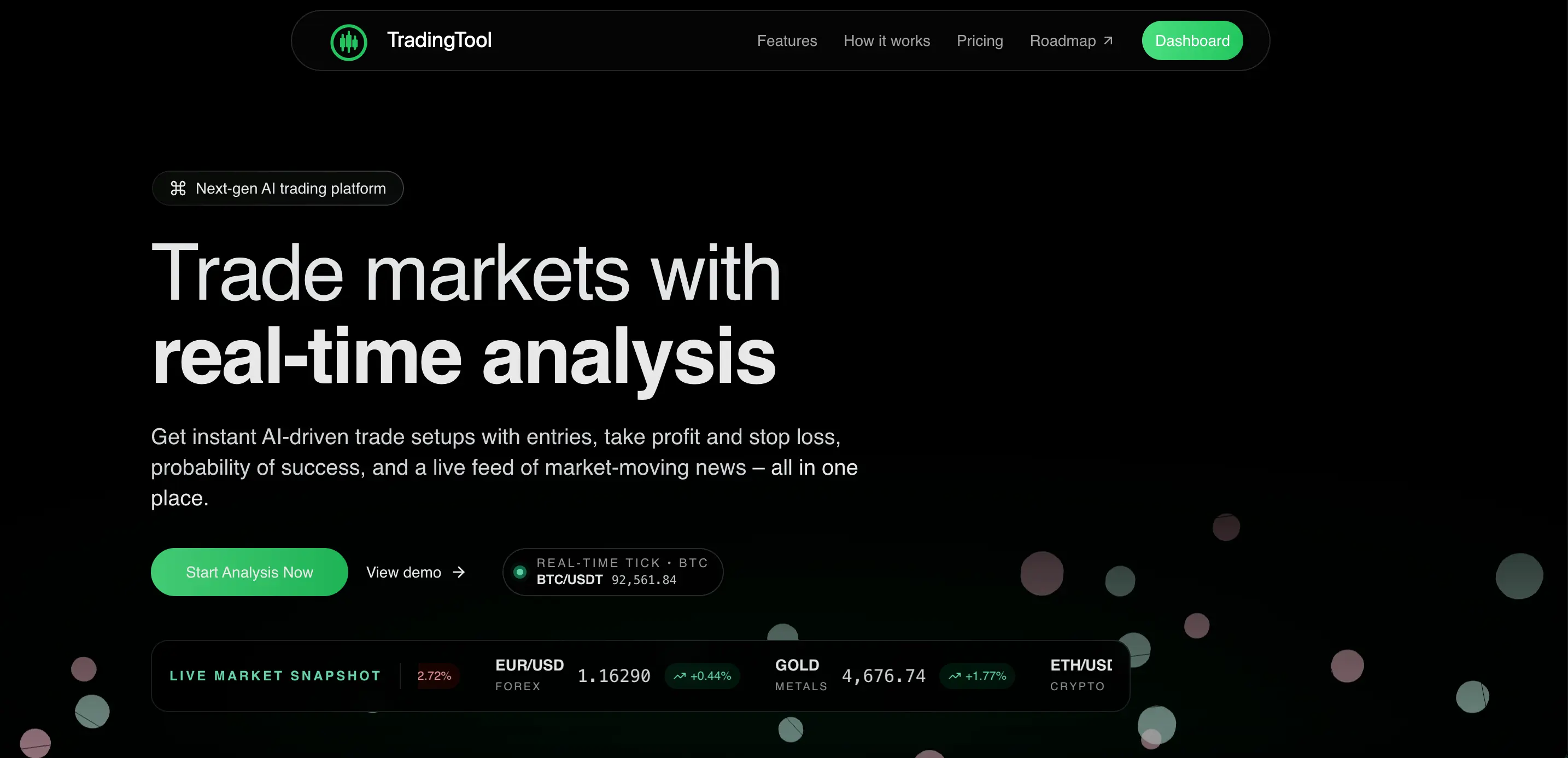
TRADING-TOOL market intelligence platform
A data-intensive decision platform combining external data, AI analysis, dashboards and operational workflows.
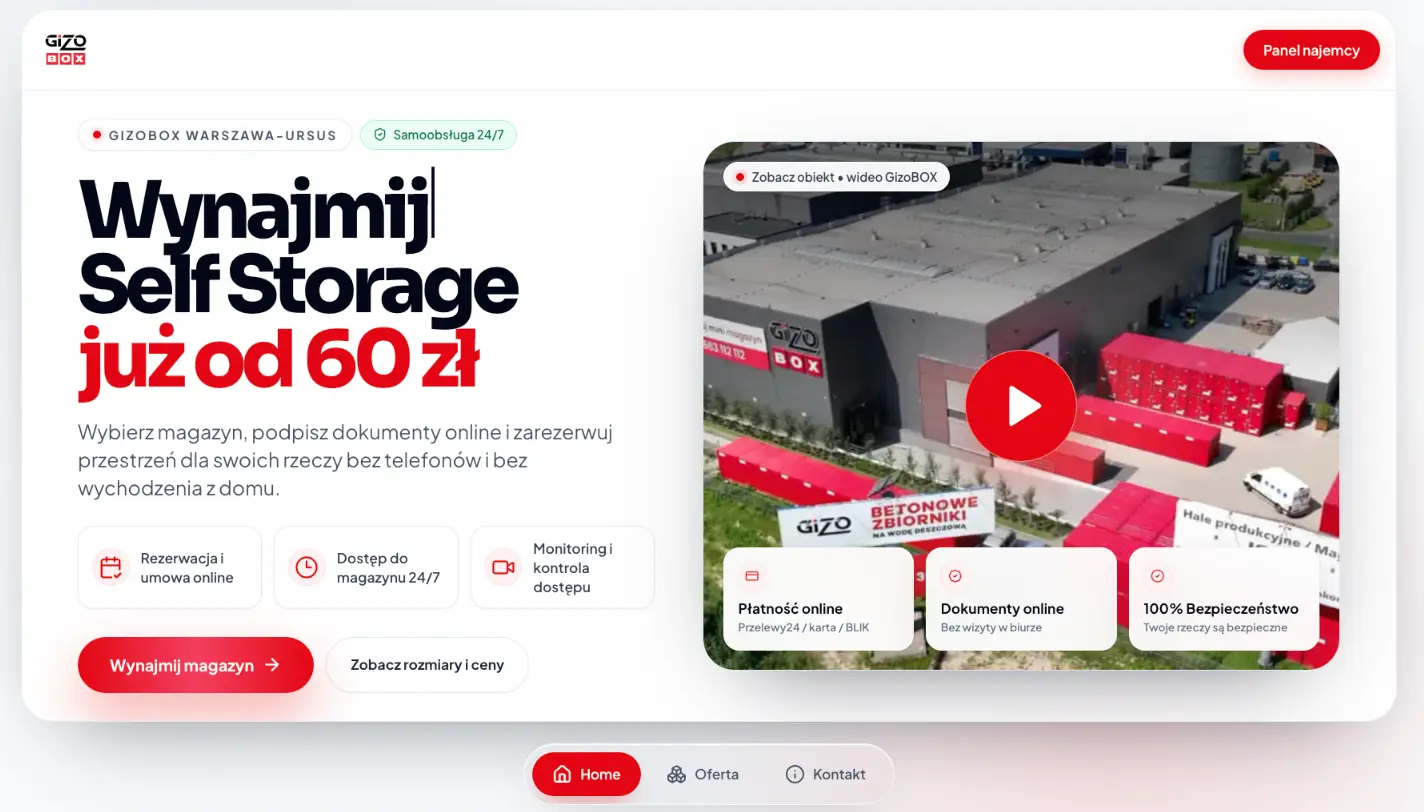
Rentya self-storage operating platform
A modular platform connecting reservations, payments, documents, customer self-service and operator controls.

Farm-Well gamified agriculture platform
A product ecosystem combining user progression, gamification mechanics, responsive interfaces and business operations.
Smart contract development FAQ
Questions teams ask before building protocol infrastructure.
Clear answers about scope, security, integrations and the boundary between implementation and independent audit.
A production engagement can include protocol architecture, Solidity implementation, automated testing, deployment tooling, backend integration, event indexing, administration interfaces, monitoring and preparation for independent security review.
No. We can deliver the complete product architecture around the contracts, including APIs, indexers, databases, wallets, web or mobile interfaces, administration tools and operational monitoring.
Yes. We can analyse the existing architecture, identify upgrade and migration constraints, add compatible modules, integrate new product flows or design a controlled transition to a new contract system.
We provide secure development, threat modelling, automated verification and audit readiness. Formal independent audit conclusions should be provided by a specialised external security auditor.
The exact network depends on product requirements. We primarily design EVM-compatible systems and evaluate finality, fees, ecosystem tooling, liquidity, security assumptions and integration requirements before selecting a target chain.
Upgradeability, migration, pause mechanisms, role ownership, multisig and timelock requirements are treated as architecture decisions. The selected approach depends on governance, trust assumptions and the cost of future change.
Yes. We can add blockchain capabilities to an existing product without moving every process on-chain. Contracts are integrated through typed APIs, wallets, indexers, event consumers and operational tools.
Build the protocol as a product
Bring us the rules, risks and constraints. We will turn them into an operable system.
Start with a technical discovery session for a new protocol, an existing contract architecture or a blockchain module that must integrate with your current product.