AI was supposed to transform operations, reduce costs and accelerate decision-making. Yet many teams end up with expensive experiments that never reach production or fail to deliver measurable ROI.
In practice, a large share of AI implementation in business fails for reasons that have little to do with the model itself. The root causes are strategy, data, and workflow adoption.
The real problem is not AI — it’s how companies implement AI
Most companies start with tools instead of outcomes. They add AI next to existing systems, without integration, and without KPI-driven accountability. That’s why adoption collapses and ROI never shows up.
1) No clear business problem = no value (AI becomes a gadget)
When the goal is “we want AI”, the output is usually a chatbot with no context, a dashboard nobody uses, or a pilot that never changes a real decision.
At Softech.app, we start with outcomes: Which measurable business problem should disappear? Typical targets are time reduction, fewer errors, higher throughput or revenue impact.
2) Poor data readiness kills enterprise AI implementation
AI process automation is only as good as your data. If data is scattered across CRM, ERP, spreadsheets and legacy tools, the model learns noise and produces inconsistent results.
We begin with data architecture: integration, cleaning, standardization and a single source of truth. Only then do we build AI on top of reliable inputs.
3) AI not embedded in workflow = zero adoption
Even the best model fails if it lives in a separate tool. Teams won’t switch tabs and change routines unless AI is built into daily work.
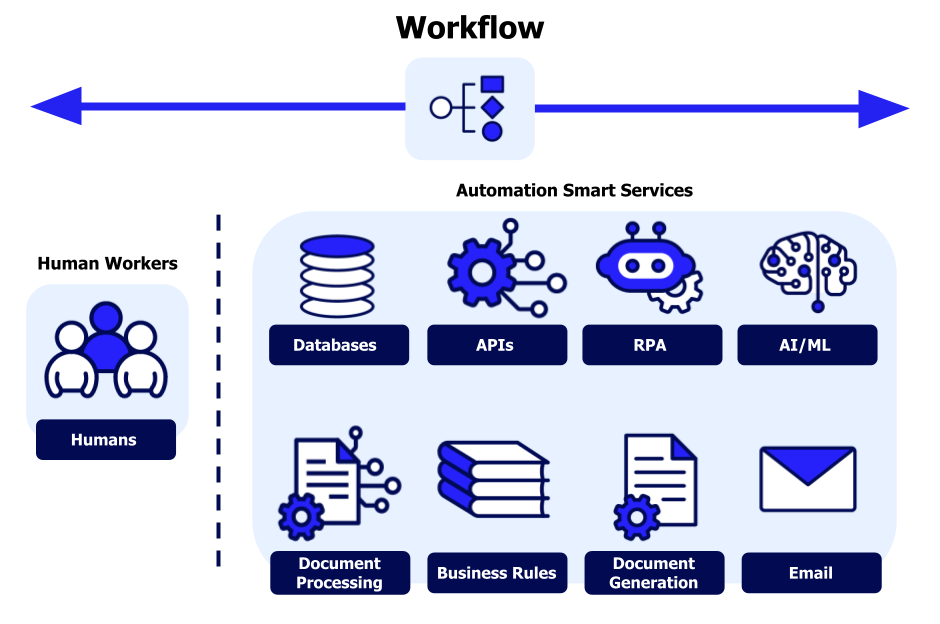
We embed AI into existing systems and workflows: support, operations, CRM, reporting — and we automate actions, not just recommendations.
4) Off-the-shelf tools are not custom AI solutions
Generic AI tools are powerful, but they rarely match your company’s processes, data context and compliance needs. Trying to force the business to fit the tool often leads to disappointment.
We build custom AI solutions tailored to your data, business logic and scale — including integrations and guardrails.
5) No ROI measurement = the project dies
Without clear KPIs, the organization can’t justify maintenance. AI becomes “nice to have” and gets abandoned.
Every project we deliver is tied to measurable business outcomes — cost reduction, time savings, error reduction or revenue impact.
How successful AI implementation for companies works (our model)
- Process & data audit
- Define goals and KPIs
- Integrate systems (CRM/ERP/e-commerce/data)
- Build custom AI automation
- Deploy inside real workflows
- Measure ROI and iterate
Who benefits most from AI in business?
AI is most effective in companies with repeatable processes, operational data, and a need to scale without growing headcount — SaaS, e-commerce, logistics, fintech and B2B services.
Why companies choose Softech.app
We don’t sell hype. We build production-grade systems where AI is integrated, measurable, and aligned with business goals. If you want AI integration services that deliver ROI, contact Softech.app.
FAQ: AI implementation in business
How much does AI implementation in a company cost?
It depends on data readiness, integrations and automation scope. The best approach is to start with a narrow MVP focused on a single business goal.
How to implement AI in business step by step?
Define KPIs, prepare and integrate data, embed AI into workflows, then measure ROI and iterate.
Why do AI projects fail in companies?
Unclear goals, poor data, lack of workflow integration, reliance on generic tools and missing ROI tracking are the top reasons.
Is an off-the-shelf AI chatbot enough for a business?
Not if you need measurable outcomes. Business chatbots must use your internal data and connect to real processes.