Design the economy before you issue the token.
We model participants, utility, supply, sources, sinks, rewards, governance and abuse scenarios before token implementation begins. The result is a product economy that can be explained, measured and operated — not a speculative layer attached to an unfinished product.
Product utility, measurable incentives and operational controls before issuance.
SOURCES · UTILITY · SINKS
MEASURED SUPPLY
EXPLICIT UTILITY
CONTROLLED INCENTIVES
Starting point
Product utility
We begin with user behaviour and value exchange, not token supply.
Engineering model
Model + validate
Explicit assumptions, scenarios, simulations and measurable control points.
Decision quality
Token or no token
The process may conclude that a token is unnecessary for the product.
Delivery scope
Economy to system
Mechanism design, product rules, contracts, backend and operations.
What token engineering includes
Tokenomics is a product system, not a supply chart.
Token engineering is the process of designing, modelling and validating the utility, incentives, supply, distribution, governance and control mechanisms of a token-based digital product.
A credible token economy explains who creates value, who receives value, why participants return, how supply moves and which controls prevent extraction from becoming stronger than product utility.
01 / ACTORS
Participants and value exchange
We identify every actor, the value they contribute, what they receive and where incentives can become misaligned.
02 / FLOWS
Sources, circulation and sinks
We model where units enter the economy, how they move and which meaningful product actions remove or lock supply.
03 / RULES
Utility, rewards and governance
Access, rewards, pricing, status, voting and ownership rules are connected to real product behaviour.
04 / CONTROL
Measurement and operational response
Dashboards, thresholds, treasury controls and scenario monitoring allow the economy to evolve without blind intervention.
Where token economies usually fail
A token cannot repair a product that has no durable value loop.
Most failures begin before implementation: unclear utility, rewards without corresponding sinks, concentrated control or assumptions that cannot be measured after launch.
RISK / 01
Supply designed before utility
The project starts with allocation percentages and vesting before defining why a user should hold, spend or earn the token.
The token becomes a fundraising narrative instead of a product mechanism
RISK / 02
Rewards without meaningful sinks
Users receive tokens continuously, but the product offers no recurring reason to spend, lock or exchange them for real utility.
Emission pressure grows faster than product demand
RISK / 03
One incentive for every participant
Creators, buyers, operators, contributors and investors are treated as if they respond to the same rewards and time horizons.
Optimising one group damages another part of the system
RISK / 04
Governance without responsibility
Voting power is introduced without execution limits, delegation design, timelocks or protection against concentrated influence.
Governance becomes symbolic or operationally unsafe
RISK / 05
No abuse and extraction model
The economy is tested for expected behaviour but not farming, sybil activity, mercenary participation or coordinated manipulation.
The strongest strategy is extracting rewards, not using the product
RISK / 06
No post-launch control system
Teams cannot observe velocity, concentration, reward efficiency, sink utilisation or treasury exposure in one operational view.
Changes are reactive and based on incomplete market signals
We turn tokenomics assumptions into explicit product rules that can be challenged before they become irreversible market behaviour.
Token economy architecture
Every unit needs a reason to enter, circulate and leave the economy.
We map the full lifecycle of value. Sources create supply or access, circulation connects participant behaviour with utility, and sinks prevent the economy from becoming a one-directional reward machine.
Sources
SOURCE / 01
Earned distribution
Units enter through verified contribution, participation or measurable product outcomes.
SOURCE / 02
Treasury and scheduled issuance
Controlled release supports product growth without hiding future dilution or discretionary allocation.
Circulation
FLOW / 01
Utility transactions
Users exchange tokens for access, upgrades, services, priority, content or product-specific capabilities.
FLOW / 02
Participant exchange
Value moves between users, creators, operators and service providers according to transparent rules.
Sinks and locks
SINK / 01
Consumption and redemption
Product actions remove circulating units or convert them into services with clear user value.
SINK / 02
Commitment and locking
Locking mechanisms represent responsibility, access or long-term alignment rather than artificial scarcity alone.
Healthy token economies do not depend on permanent new demand. They create repeatable utility loops in which value creation, value capture and supply movement remain understandable under different growth scenarios.
Participant incentive matrix
Different actors create different value — and require different controls.
We avoid treating every participant as a generic token holder. Each role receives a separate contribution model, benefit and control boundary.
ACTOR
CONTRIBUTION
VALUE RECEIVED
CONTROL MECHANISM
ACTOR / 01
End users
Contribution
Usage, fees, verified activity, content discovery and network demand.
Value received
Access, status, savings, ownership, utility or better product outcomes.
Control mechanism
Eligibility, limits, cooldowns and behaviour-based rules.
ACTOR / 02
Creators or suppliers
Contribution
Inventory, content, services, liquidity or other product-side supply.
Value received
Revenue, distribution, reputation, rewards and governance influence.
Control mechanism
Quality thresholds, slashing, settlement and dispute rules.
ACTOR / 03
Operators and partners
Contribution
Infrastructure, distribution, compliance, support and ecosystem operations.
Value received
Fees, service revenue, controlled incentives and data visibility.
Control mechanism
Role permissions, budgets, approvals and audit trails.
ACTOR / 04
Treasury and governance
Contribution
Capital allocation, ecosystem coordination and long-term policy decisions.
Value received
Sustainable protocol growth and measurable ecosystem health.
Control mechanism
Multisig, timelocks, mandates, delegation and transparent reporting.
An incentive is only effective when the desired behaviour is observable, the reward is proportional to created value and the participant cannot maximise returns by bypassing the product’s purpose.
Token engineering capabilities
From economic assumptions to an implementable product system.
We connect mechanism design with software architecture, data and operating controls so the economy can be launched and managed responsibly.
Economy architecture
Actors, value loops, product utility, sources, sinks and control boundaries.
Participant mapping
Value flow diagrams
Utility hierarchy
Supply and distribution
Issuance, allocation, vesting, unlocks and distribution rules aligned with the product lifecycle.
Supply schedules
Allocation constraints
Vesting mechanics
Scenario modelling
Assumption testing across adoption, concentration, reward and liquidity conditions.
Sensitivity analysis
Adversarial scenarios
Growth stages
Governance design
Decision rights, delegation, treasury mandates and execution controls.
Voting boundaries
Timelocks and multisig
Delegation models
Reward orchestration
Backend workflows, eligibility, calculations, claims and fraud-resistant distribution.
Eligibility engines
Reward calculation
Claim workflows
Economy analytics
Operational metrics for supply, velocity, concentration, utility and participant behaviour.
Economy dashboards
Cohort analysis
Treasury reporting
Treasury operations
Budgets, approvals, programme controls and traceable policy execution.
Campaign budgets
Approval workflows
Operational limits
Post-launch monitoring
Signals and thresholds that identify unhealthy extraction or incentive drift early.
Velocity alerts
Concentration signals
Reward efficiency
Product-specific economy scenarios
The same token model should not be copied across different products.
We select mechanisms based on participant behaviour, regulatory context and the value the underlying product already creates.
GAMING ECONOMY
Rewards and ownership connected to real game loops
A game economy can use tokens for ownership, competition, progression or creator participation, but engagement must remain valuable without speculative demand.
ENGINEERING POSITION
Use a token only where transparent ownership, settlement or cross-system utility improves the game experience.
POTENTIAL UTILITY
Tournament entry and prize settlement
Player-owned assets or access
Creator and guild reward systems
PRIMARY RISKS
Pay-to-win dynamics
Reward farming and bot activity
Economy detached from game retention
Token risk model
We challenge the token before the market does.
The model is evaluated across product, economic, operational and governance failure modes before implementation and issuance decisions are finalised.
RISK / UTILITY
Utility durability
Does the product create recurring reasons to use the mechanism after incentives are reduced?
If demand exists only while rewards are high, the economy is a campaign, not a durable system.
RISK / SUPPLY
Emission pressure
Can sources expand faster than meaningful sinks, locks or productive demand?
Unbalanced issuance transfers the cost of growth to later participants.
RISK / ACTORS
Participant extraction
Can one actor maximise rewards while reducing value for the rest of the ecosystem?
A locally rational strategy can destabilise the complete product.
RISK / CONTROL
Governance concentration
Who can change parameters, allocate treasury resources or override emergency controls?
Unclear authority creates both security and credibility risk.
RISK / MARKET
Liquidity dependency
Does the product remain useful if exchange liquidity, token price or external demand declines?
Product utility should survive market conditions outside the team’s control.
RISK / DATA
Measurement blindness
Can the team measure utility usage, concentration, velocity and reward efficiency after launch?
An economy that cannot be observed cannot be adjusted responsibly.
TOKEN NECESSITY GATE
The process may conclude that the product should launch without a token.
We recommend token implementation only when it creates functionality, coordination or ownership that is materially stronger than a conventional database, points system or payment balance.
Token engineering process
A delivery process built around hypotheses, models and measurable decisions.
Each stage turns an abstract economy assumption into a reviewable artefact for product, engineering, legal and operational stakeholders.
Product and participant discovery
We map the product, actors, value creation, existing behaviours and strategic constraints.
OUTPUT / Product economy map
Utility and value-flow design
We define sources, circulation, sinks, access and participant exchange without committing to supply numbers too early.
OUTPUT / Utility and flow specification
Mechanism and supply modelling
Distribution, vesting, rewards, treasury and governance are modelled under explicit assumptions.
OUTPUT / Token mechanism model
Scenario and abuse testing
We evaluate adoption, concentration, extraction, low-demand and adversarial participant strategies.
OUTPUT / Risk and scenario report
Implementation architecture
Economic rules are translated into contracts, backend services, data models, admin controls and analytics.
OUTPUT / Technical implementation blueprint
Launch controls and monitoring
We define thresholds, dashboards, treasury procedures and review cadence for the live economy.
OUTPUT / Economy operations system
Economy implementation architecture
Models become useful when product, data and execution layers agree.
The final stack depends on whether the mechanism is on-chain, off-chain or hybrid. We select tools around auditability, user experience, operational control and measurement.
MODEL
Economic modelling and simulation
Structured assumptions, scenario exploration, sensitivity analysis and measurable economy hypotheses.
CHAIN
Token and protocol implementation
Supply, claims, vesting, access, governance and settlement implemented in reviewable contracts.
ORCH
Eligibility and reward orchestration
Off-chain rules, calculations, fraud controls, queues and claims connected with product state.
DATA
Economy data and analytics
Events, balances, cohorts, concentration, velocity, reward efficiency and treasury visibility.
OPS
Treasury and programme operations
Role-based configuration, budgets, approvals, campaign controls and policy history.
Relevant product engineering proof
We already build the systems token economies depend on.
Digital economies require payments, user state, gamification, rewards, data and operational panels. These capabilities are visible across products delivered by Softech.
The projects below demonstrate adjacent product-engineering capabilities. They are not presented as token or blockchain implementations.
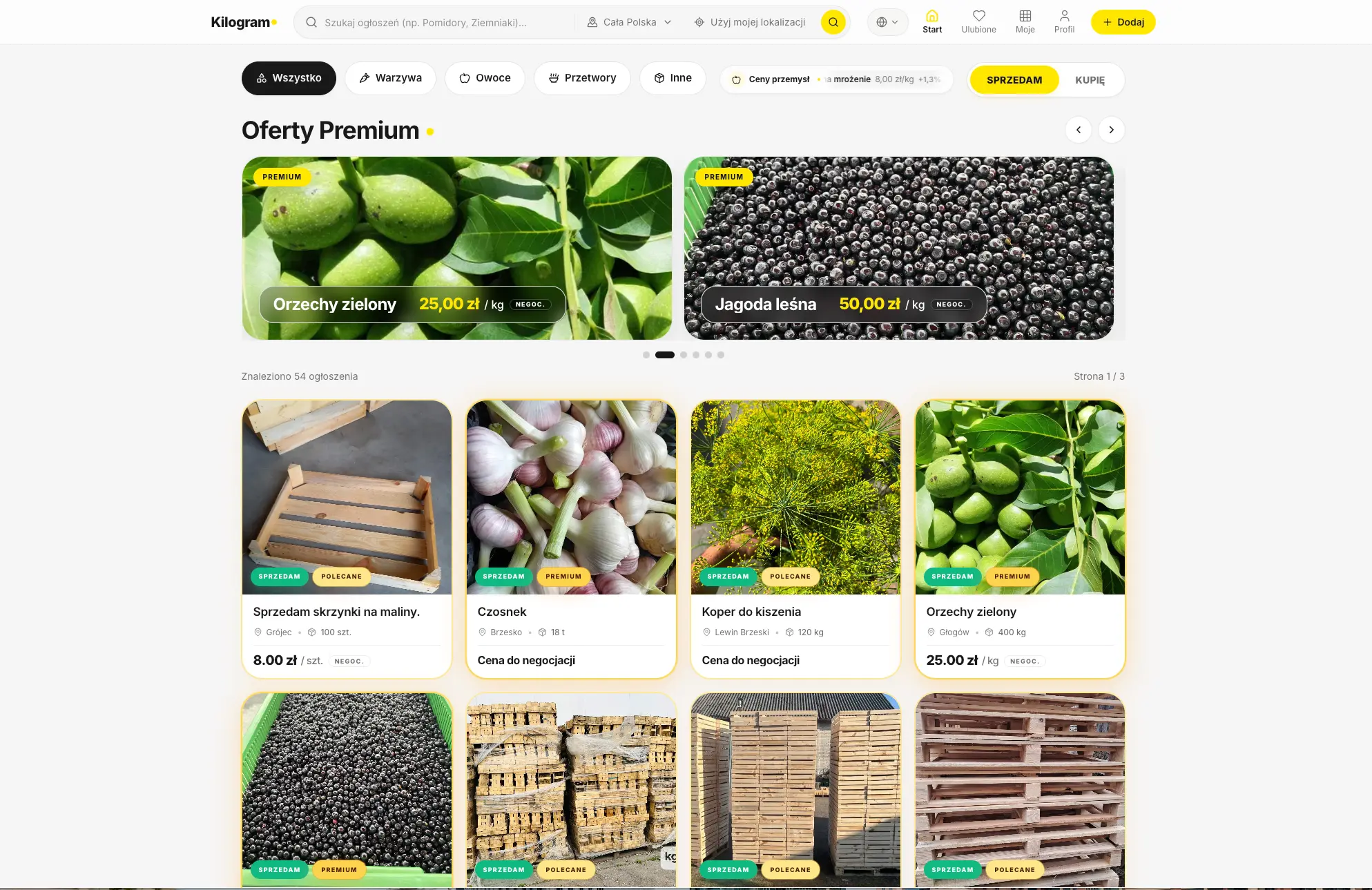
KILOGRAM multi-platform marketplace
A marketplace ecosystem combining listings, paid promotion, user state, notifications, community mechanics and administration.
Farm-Well gamified agriculture platform
A digital product connecting progression, gamification, responsive interfaces and operational workflows.
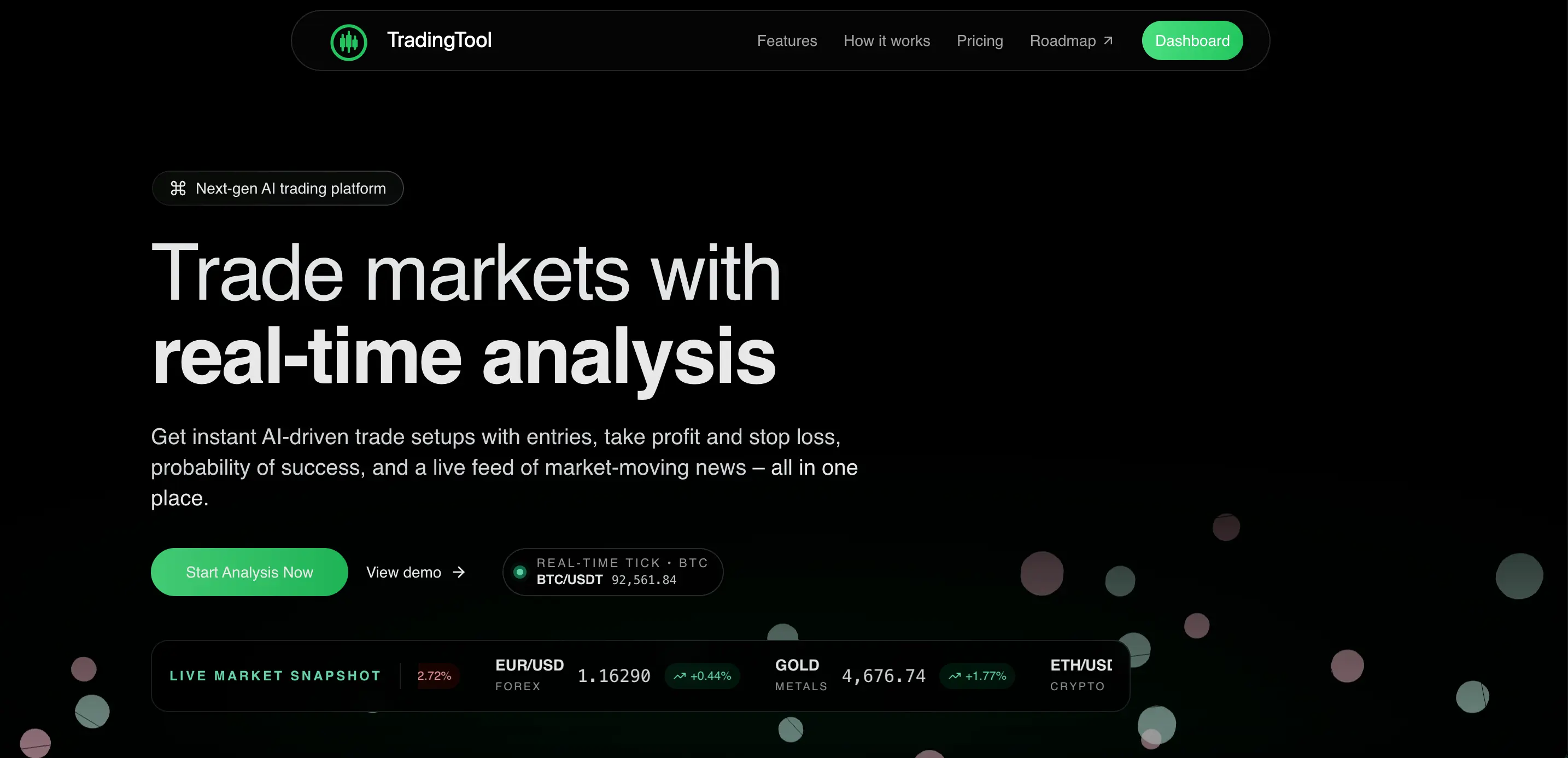
TRADING-TOOL market intelligence platform
A data-intensive product combining external data, AI analysis, dashboards and decision workflows.
Tokenomics and token engineering FAQ
Questions teams should answer before implementing a token.
Clear answers about utility, supply, modelling, implementation and the decision to use a token at all.
Token engineering is the structured design, modelling and validation of a token-based product economy. It covers participants, utility, incentives, sources, sinks, supply, distribution, governance, risk, implementation and post-launch monitoring.
Tokenomics often describes the economic parameters of a token. Token engineering extends this into a complete product discipline that includes system requirements, scenario testing, software architecture, operational controls and measurable post-launch behaviour.
No. A token should be used only when it creates meaningful utility, coordination, ownership or settlement that is stronger than a conventional database, points programme or payment balance. Our process may recommend launching without a token.
Yes. We can design reward, ownership, tournament, creator, loyalty or marketplace mechanics for games and iGaming-related products, while testing pay-to-win, farming, bot activity, liquidity dependency and retention risk.
Yes. We can translate the economic model into smart contracts, vesting and claim systems, backend services, eligibility engines, indexers, analytics, administration panels and user interfaces.
Testing can include sensitivity analysis, scenario modelling, participant strategy analysis, supply and sink simulations, concentration assumptions, low-demand conditions and abuse cases. The method depends on the maturity and complexity of the product.
Yes. We can analyse an existing economy, map current flows, identify incentive drift, concentration or emission problems and design controlled changes, migrations or operational monitoring.
Engineer the economy before issuance
Bring us the product, participants and constraints. We will determine whether a token creates real value.
Start with an economy discovery session for a game, marketplace, loyalty programme, membership system or existing token model that requires redesign.