How can AI help people publish better marketplace listings?
Publishing an offer often involves selecting a category, naming the product, writing a description and adding an image. Agricultural sellers may know their produce extremely well but have little time to prepare clear marketing copy. AI can help draft text, reorganize information and generate an illustration.
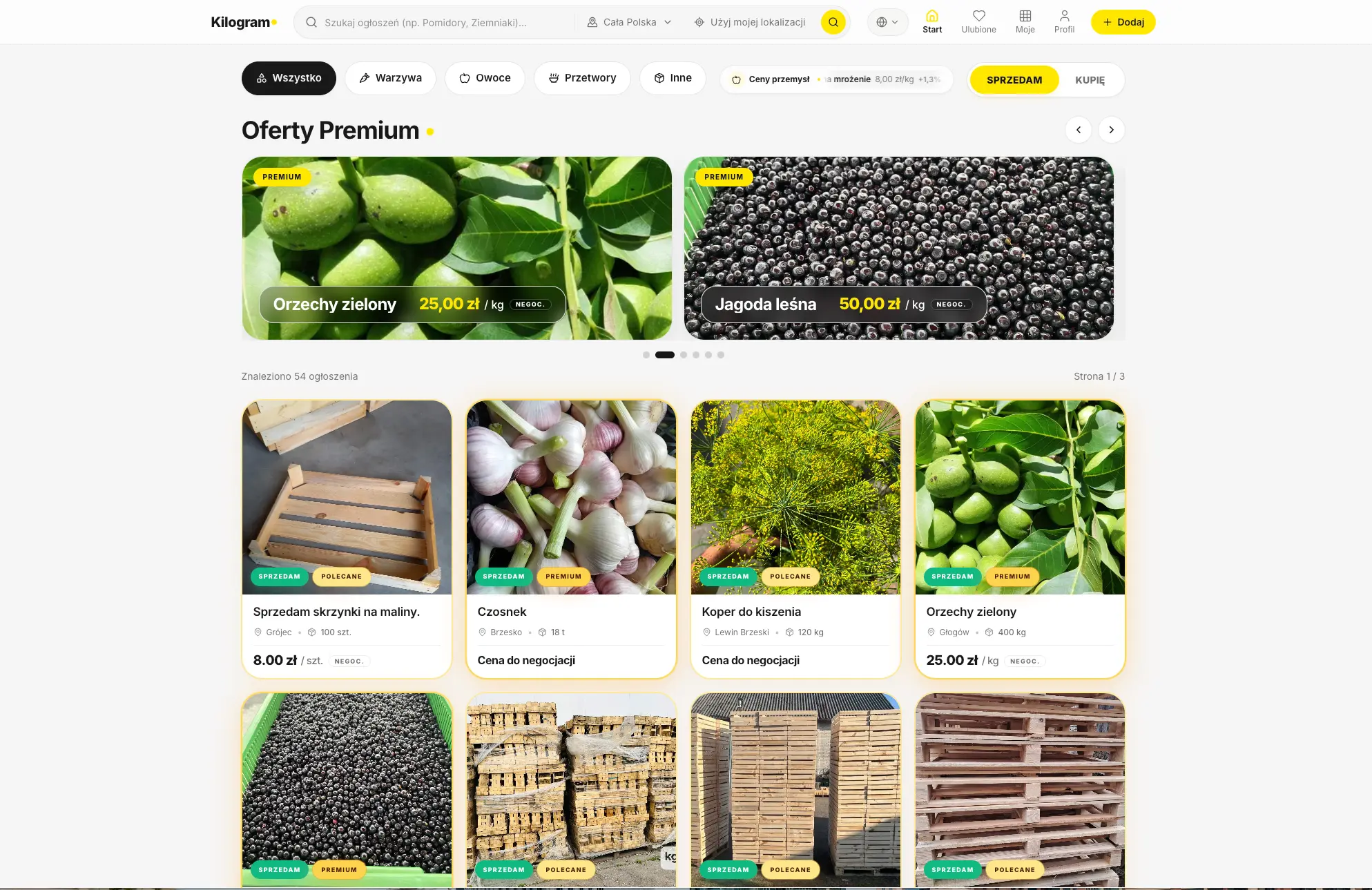
Delivery evidence: KILOGRAM uses AI to assist with listing descriptions and illustrations. Generation states, attempt histories and operator controls are documented. AI illustrations are not product photographs, and listing facts require validation.
The model should be an assistant, not an unverified source of product facts. It may make language more readable, but it cannot independently confirm a product's variety, quality certification or actual availability.
KILOGRAM's verified case study confirms AI modules supporting both listing descriptions and image generation. This guide also covers broader rewriting and expansion workflows and the safeguards needed when designing those capabilities for other marketplaces.
Generate descriptions from structured, seller-provided facts
Start with the listing form: product, category, offer type, quantity, unit, price, location and verified details entered by the seller. The model can turn these inputs into readable copy without changing their meaning.
For example, a seller supplies: “carrots, 800 kg, Mazovia region, collection only”. A suitable draft could read: “800 kg of carrots available for collection in the Mazovia region. Collection date and details by agreement.” It should not invent an organic certificate, premium grade or harvest date.
Useful actions include “draft a description”, “shorten”, “improve clarity” and “expand using additional facts”. Each should preserve user-supplied information and leave the final text editable.
Writing new copy and improving existing copy are different jobs
Some users have no text and want a starting draft. Others already wrote a description but need better structure or clearer language. Expanding copy should not mean adding unsupported product claims merely to make an offer sound attractive.
Keep factual listing fields separate from language presentation. The listing form owns product attributes; AI can help express them. Where a detail is missing, the system should ask the seller instead of guessing.
Set suitable length limits, avoid exaggerated sales language, preserve quantities and units and verify that translation has not changed commercial facts.
AI illustrations are not product photographs
A generated image may make a listing easier to notice when a seller has no suitable photo. But an AI-generated illustration must not be confused with a photograph of the actual batch being sold.
This is especially important in agricultural trading. An image may depict perfect-looking fruit when the physical goods differ. The platform should not imply that an illustration proves quality, origin or condition.
A responsible interface clearly labels generated visuals, allows them to be replaced with genuine photos and controls where they are displayed. Some advertising and commerce channels have additional requirements for AI-generated media and product information.
What KILOGRAM's image-generation experience demonstrates
The documented KILOGRAM platform contains distinct AI modules for descriptions and images. Generation instructions use structured listing information such as offer type, category and product name. One universal prompt is not sufficient for every type of fruit and vegetable. Different products need different constraints and quality checks.
The case study describes issues involving less familiar produce, including wild strawberries and rhubarb. Models may confuse these with visually more common products. Representative testing and rejection of inaccurate results are therefore essential.
The implementation also records attempts, model and prompt information, errors and outcomes. Operators can inspect failures and retry work. This demonstrates why production AI requires operational controls beyond a single model call.
A safe AI-assisted publishing workflow
The user enters listing facts, requests AI help, reviews a text or image suggestion and approves the final publication. The interface should distinguish facts supplied by the seller from wording or illustration proposed by a model.
- Input: load the correct listing and verify user authorization.
- Generate: choose instructions appropriate to the product category and output type.
- Check: validate output format, safety and consistency with known facts.
- Review: allow edits, rejection or replacement with authentic photography.
- Publish: store the approved version and update the correct listing state.
- Operate: monitor failures, cost and safe retries.
Higher-risk categories may require additional moderator review. The extent of oversight should follow the potential consequences of misleading content.
Failures, generation costs and user limits
AI requests consume resources, and retries may add cost. Products need reasonable per-user limits, duplicate-request handling and clear job statuses.
Handle provider outages, invalid output and cases where a listing changes while AI is working. An old model response should never silently overwrite newer text that the seller edited by hand.
Operations staff need visibility into attempts, rejection rates, latency and costs. At larger scale, processing queues, concurrency controls and reliable retry mechanisms become important.
Does AI-generated listing copy improve SEO?
Clearer descriptions can help buyers understand an offer, but mass-producing near-identical text is not a quality strategy. Accurate, specific product facts are more useful than generic wording that could fit any listing.
Google advises checking AI-assisted content for accuracy, relevance, usefulness and originality, including metadata and visual disclosures. Source: Google Search Central guidance on generative AI content.
Public listing pages should show real offer information and current status. AI may improve presentation but should not be used to manufacture false content variety.
Measure value to sellers, buyers and operators
Compare time to complete an offer, abandoned forms, accepted AI suggestions and the number of manual edits. Also track rejected images, wrong product identification and reports of misleading descriptions.
Counting generated images alone does not demonstrate success. A good outcome means that a seller publishes an accurate offer with less effort while a buyer continues to receive trustworthy information.
Roll out in stages: start with controlled writing assistance, add illustrations when quality is established and only expand into more advanced use cases once risk and cost are understood.
Adding AI to an existing classifieds product
AI assistance does not necessarily require rebuilding the marketplace. However, the product must have structured listing data, reliable authorization and a safe way to store generated drafts and outcomes.
Before estimation, collect representative listings, categories, desired description improvements and image-use rules. Test on actual products, including less common examples, and expand only after quality and cost checks.
Read the KILOGRAM case study, our agricultural marketplace planning guide and SOFTECH's AI automation services.