The asset registry is the backbone of fire-inspection software
Inspection scheduling only works when the system can identify exactly what is being inspected. A production fire-safety platform therefore needs a canonical asset registry before it needs calendars, dashboards or PDF templates. The registry should connect organization, site, building/zone, asset type, physical identifier, manufacturer data, service requirements, historical inspections and documents.
Under Poland's fire-protection regulation, read together with the 2024 amending act, the general rule for fire-protection devices and extinguishers is inspection and maintenance according to applicable standards, technical documentation and manufacturer instructions, with a general minimum cadence of once a year. The 2024 amendment explicitly excludes autonomous smoke and carbon-monoxide detectors from that general §3(1)–(3) rule and sends their maintenance back to manufacturer instructions. Software should therefore never encode one global "365 days" constant: recurrence policy must be versioned by asset class and rule source, with exceptions, manufacturer instructions, contracts and applicable standards preserved as provenance for every calculated due date.
1. Give every physical asset a stable identity
Do not use the visible label "Hydrant 12" as a database key. Use an immutable internal asset ID and keep human-facing code, serial number, manufacturer reference, QR/barcode and customer label as attributes. When a label is replaced, historical inspections still point to the same physical asset.
2. Model location as hierarchy, not free text
A useful structure is customer → site → building → floor/zone → asset. GPS can be supporting evidence, but operational location should be structured enough to route technicians, group protocols and preserve history when a site name changes.
3. QR should open the asset context, not bypass authorization
A QR or barcode is an identifier/resolver. Scanning it should locate the canonical asset and then apply the logged-in user's permissions. Avoid putting sensitive asset state directly into the code. The same resolver can support technician lookup, customer verification and controlled public labels through different views.
4. Separate the inspection requirement from the work order
| Object | Purpose |
|---|---|
| Inspection policy | Why and when the asset needs a specific inspection |
| Due instance | The next required occurrence calculated from policy/history |
| Work order | Operational task assigned to a technician/team |
| Inspection result | Completed checklist, measurements, defects and disposition |
| Protocol | Signed/rendered output generated from canonical result state |
This prevents a rescheduled visit from changing the legal/service history and lets one visit contain multiple assets without merging their inspection identities.
5. Due dates need provenance
Store the calculated next-due date together with the policy version, triggering inspection, manual override reason and actor. If a contract or manufacturer interval changes, recalculate future work without rewriting the historical basis of previous inspections.
6. Service history should be append-oriented
An inspection can be corrected, but corrections should create a traceable new version or amendment. Preserve original measurements, defects, photos, technician identity, device identifiers, timestamps and document versions. A protocol regenerated after a correction should state which result version it represents.
7. Defects and remediation need their own lifecycle
Do not bury defects inside a PDF. Create structured findings with severity, evidence, recommendation, owner and state such as open → quoted → approved → repaired → verified. This turns inspection software into an operating system rather than an archive.
8. Build protocols from canonical state
PDF generation should read the finalized inspection state, not whatever values happen to be present in a frontend form. The protocol service receives a versioned inspection result and template version, generates the document, stores a hash/object ID and links it back to the asset and inspection.
9. First-party production pattern
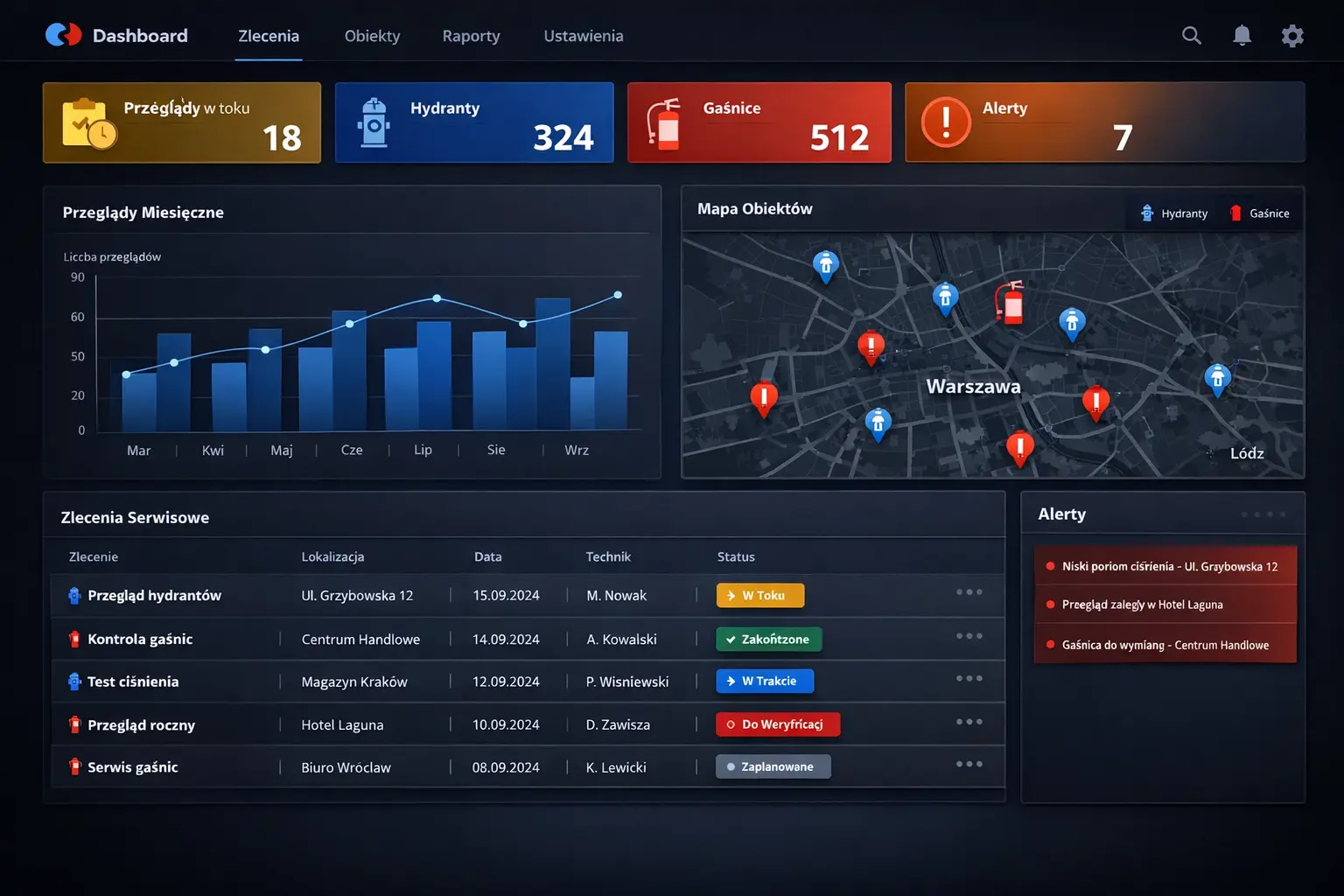
Softech's TECHPRES fire-safety system connects asset registry, technician work, measurements, protocols and service history. The same graph supports both operational planning and evidence retrieval. For custom implementation, integrations and productization, see Fire Safety & Inspection Software Development.
Asset-registry checklist
- Immutable internal asset ID plus human identifiers.
- Structured site/building/zone hierarchy.
- QR/barcode as resolver with authorization.
- Versioned inspection policies and due-date provenance.
- Separate work orders and inspection results.
- Structured findings/remediation lifecycle.
- Append-oriented service history and protocol versions.