Introduction
For decades, equipment rental businesses operated using processes that changed very little.
Customers called the office.
Employees checked availability manually.
Reservations were recorded in spreadsheets.
Contracts were prepared manually.
Invoices were generated separately.
For many years, this model worked reasonably well.
However, as businesses grew, operational complexity increased dramatically.
More equipment. More customers. More locations. More employees. More administrative work.
The result was predictable.
Many rental companies found themselves spending more time managing operations than growing their business.
Today, the industry is experiencing a transformation similar to what retail experienced during the rise of eCommerce.
Companies embracing digital tools are scaling faster.
Companies relying on manual processes are increasingly constrained by operational inefficiencies.
This is why modern SaaS platforms have become one of the most important growth drivers in the rental industry.
Why Traditional Rental Operations No Longer Scale
Most rental business owners are familiar with a common scenario.
A customer calls asking about equipment availability.
An employee checks a spreadsheet. Another team member confirms scheduling. Someone prepares documents. Someone else updates inventory records.
The reservation is completed only after multiple manual actions.
This process may work for a small operation.
It becomes increasingly problematic as the business grows.
Every additional asset increases complexity.
Every new location adds operational overhead.
Every new employee introduces potential communication challenges.
Eventually, growth itself becomes difficult to manage.
This is the point where technology stops being a convenience and becomes a necessity.
What Is Rental Management Software?
Rental management software is a centralized platform designed to manage the core operations of a rental business.
Instead of relying on disconnected tools and manual workflows, companies operate from a single source of truth.
Modern rental software typically includes:
- inventory management,
- online reservations,
- customer management,
- payments and invoicing,
- maintenance scheduling,
- reporting and analytics,
- mobile applications.
Every action updates data in real time.
Teams work from the same information.
Errors caused by manual communication are dramatically reduced.
The business becomes more predictable and scalable.
The Modern Rental Business Framework
At Softech, we often evaluate rental businesses through six key operational pillars.
1. Inventory
The foundation of every rental business is visibility into inventory.
Companies need to know where equipment is located, whether it is available, when it will return and when maintenance is required.
Without accurate inventory management, scaling becomes difficult.
2. Reservations
Modern customers expect online booking capabilities.
They want to check availability immediately. They want transparency. They want convenience.
Rental businesses are increasingly expected to provide experiences similar to hotels, airlines and eCommerce platforms.
3. Payments
Integrated online payments simplify the customer journey.
They reduce administrative workload, improve cash flow and create a more professional customer experience.
4. Maintenance
Equipment only generates revenue when it is operational.
Modern platforms automate maintenance scheduling and service reminders.
This helps reduce downtime and extend equipment lifespan.
5. Analytics
Data is becoming one of the most valuable assets in modern businesses.
Rental software can reveal equipment utilization rates, profitability by asset category, seasonal demand patterns and operational bottlenecks.
Business owners can make decisions based on evidence rather than intuition.
6. Growth
The ultimate objective is not software implementation.
The objective is business growth: more customers, more bookings, higher utilization and better margins.
Modern SaaS platforms create the operational foundation required for sustainable growth.
The Biggest Problems Rental Software Solves
Many operational issues that once seemed unavoidable can now be automated.
Examples include double bookings, inventory conflicts, late payments, manual paperwork, communication bottlenecks, lack of reporting visibility and inefficient asset utilization.
By reducing administrative friction, teams can focus more on customer service and revenue-generating activities.
Why Customer Self-Service Is Becoming the Industry Standard
Customer expectations have changed dramatically.
People book flights online, reserve hotels online and order products online.
Rental businesses are increasingly expected to offer similar convenience.
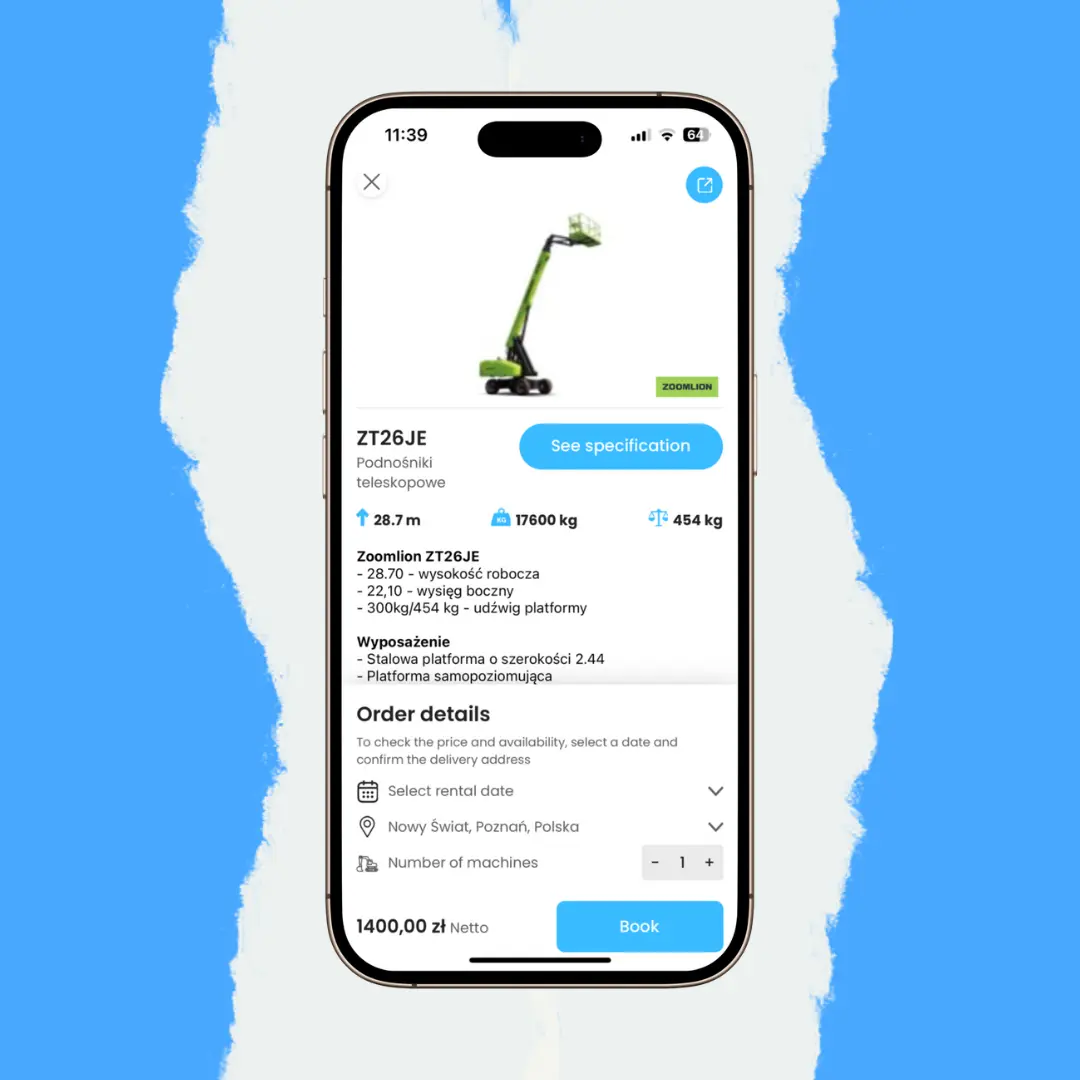
Modern rental platforms allow customers to browse inventory, check availability, book equipment, manage contracts, pay online and review rental history.
For customers, this creates convenience.
For rental businesses, it creates operational leverage.
From Rental Company to Rental Marketplace
One of the most interesting developments in the industry is the emergence of rental marketplaces.
Traditional rental businesses manage their own inventory.
Marketplace platforms aggregate inventory from multiple suppliers.
This creates several advantages.
Customers gain access to more equipment. Suppliers gain additional distribution channels. The platform becomes increasingly valuable as participation grows.
This marketplace model is becoming increasingly common across equipment rental industries.
Mobile-First Rental Experiences
Modern rental businesses are no longer office-centric.
Field technicians. Drivers. Operators. Service teams.
All require access to operational information while on the move.
Mobile applications allow teams to manage bookings, confirm deliveries, report issues, access schedules and review documentation.
Mobility is no longer a feature.
It is becoming an operational requirement.
How Artificial Intelligence Will Transform Rental Businesses
Most companies are currently focused on digitization.
The next stage is intelligent automation.
Artificial intelligence is already beginning to influence rental operations.
Future systems will increasingly support demand forecasting, dynamic pricing, predictive maintenance, equipment recommendations and fleet optimization.
Software will evolve from storing information to helping organizations make better decisions.
This shift is already underway.
Build vs Buy: Should You Develop Custom Software?
This is one of the most common strategic questions in the industry.
Off-the-shelf SaaS platforms offer speed and lower initial investment.
Custom software offers flexibility and competitive differentiation.
The right decision depends on business size, operational complexity and long-term strategy.
What is increasingly clear is that digital transformation is no longer optional.
Why Rental Software Becomes a Competitive Advantage
Technology is no longer simply a support function.
It is becoming a core business capability.
Companies using modern rental platforms can serve customers faster, improve asset utilization, reduce operational costs and scale more efficiently.
Technology creates leverage.
And leverage creates competitive advantage.
What Will the Rental Industry Look Like by 2030?
The trajectory is becoming increasingly clear.
Online reservations will become standard.
Digital contracts will replace paperwork.
AI-assisted operations will become common.
Data-driven decision-making will become expected.
Customer self-service will become the norm.
The companies embracing these trends early will likely build significant advantages over competitors who delay transformation.
Conclusion
The rental industry is entering a new era.
Customer expectations are evolving.
Operational complexity is increasing.
Competition is becoming more intense.
Modern SaaS platforms help rental businesses centralize operations, automate workflows and create better customer experiences.
Rental software is no longer a luxury.
It is becoming the foundation of scalable rental businesses.
The organizations that invest in digital transformation today will be better positioned to compete tomorrow.
Planning a Rental Software Platform?
If you are building a rental business, marketplace platform or equipment management solution, we'd be happy to discuss your project.
At Softech, we help companies design and build scalable SaaS platforms, marketplaces and business systems that support long-term growth.