Blog topic

Traceability Software: authority hub

Technical authority for EUDR traceability, Digital Product Passport architecture, supplier/origin evidence, batch lineage and audit-ready compliance workflows. It does not replace legal advice. Understand traceability architecture for supplier evidence, batches, products, chain of custody, EUDR/DPP workflows and audit-ready records.

3 articlescompliance-traceability-softwareTraceability SoftwareDigital Product PassportESPR
Topic authority graph

From knowledge to an implementation decision

Understand traceability architecture for supplier evidence, batches, products, chain of custody, EUDR/DPP workflows and audit-ready records.

Intent: informational / architectural3 articles
01 / Topic scope
Traceability Software

Technical authority for EUDR traceability, Digital Product Passport architecture, supplier/origin evidence, batch lineage and audit-ready compliance workflows. It does not replace legal advice.

Knowledge domain: Web Application & SaaS Product Engineering
02 / Authority
EUDR, DPP & Traceability System Architecture

The primary technical resource defining architecture, decisions and responsibility boundaries.

Read the authority guide
04 / Commercial owner
Compliance & Traceability Software Development

The service page remains the owner of buying intent, scope and conversion. This hub does not compete for BOFU intent.

Explore implementation
Concept model

Traceability evidence chain

Traceability becomes useful when origin evidence, transformation lineage, product identity and compliance decisions remain connected and versioned instead of being flattened into one status field.

This is a Softech architecture and operating model; it does not replace legal, regulatory or manufacturer requirements where those apply.

  1. 01

    Supplier and actor

    Legal entities, roles and responsibilities establish who supplied, verified or changed evidence.

  2. 02

    Origin evidence

    Plots, coordinates, documents and declarations are versioned with provenance rather than overwritten.

  3. 03

    Batch and transformation lineage

    Inputs, outputs, splits, merges and transformations preserve chain-of-custody relationships.

  4. 04

    Product identity

    Stable identifiers connect physical or commercial products with the correct passport and evidence version.

  5. 05

    Validation and decision

    Completeness checks, risk logic and human decisions remain distinct so evidence quality is not confused with a legal conclusion.

  6. 06

    Submission and audit

    External submissions, references, corrections and immutable history make the workflow reproducible during audit.

Start here

Foundational content in this section

These articles build the core context and help you quickly understand the most important relationships in this knowledge area.

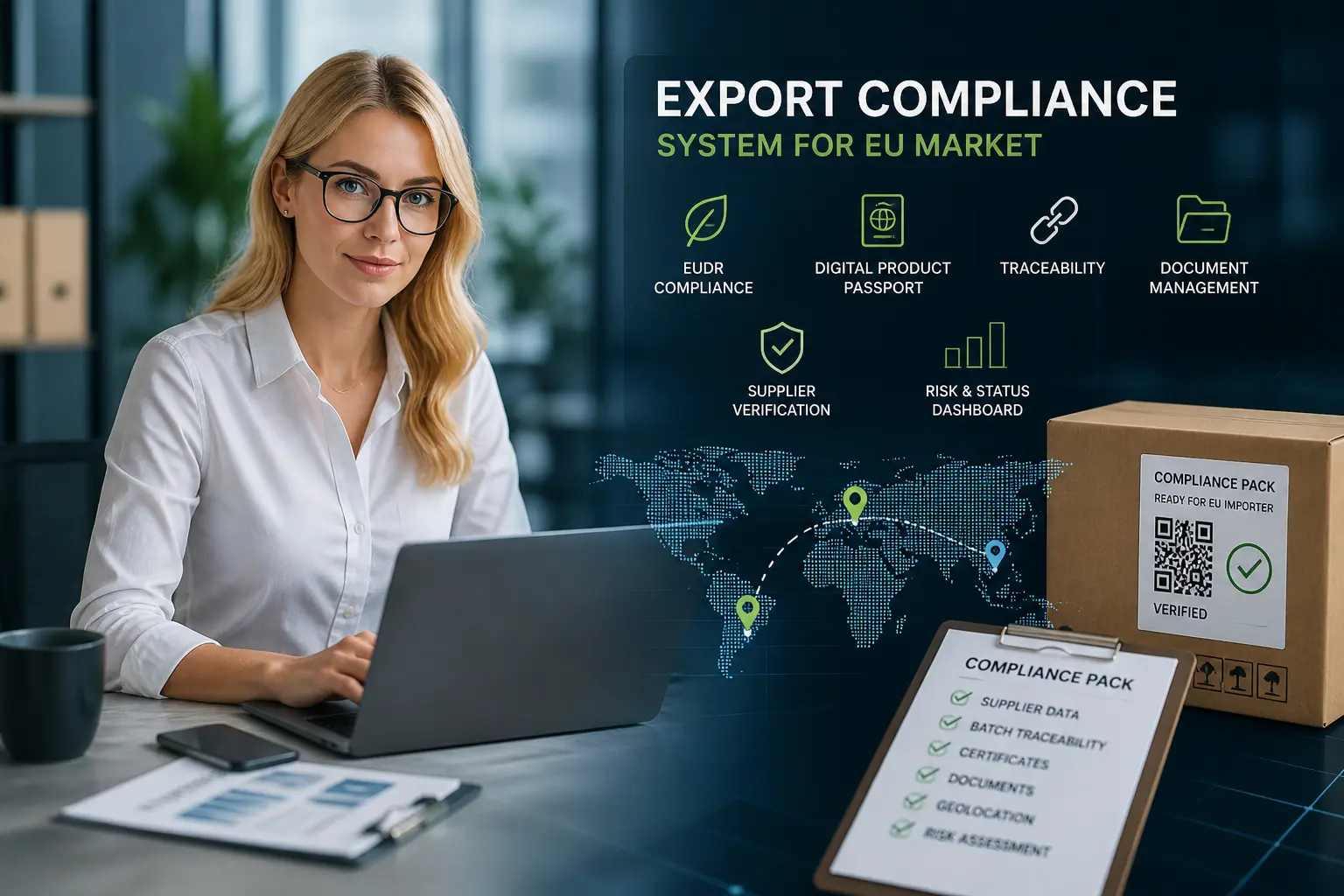
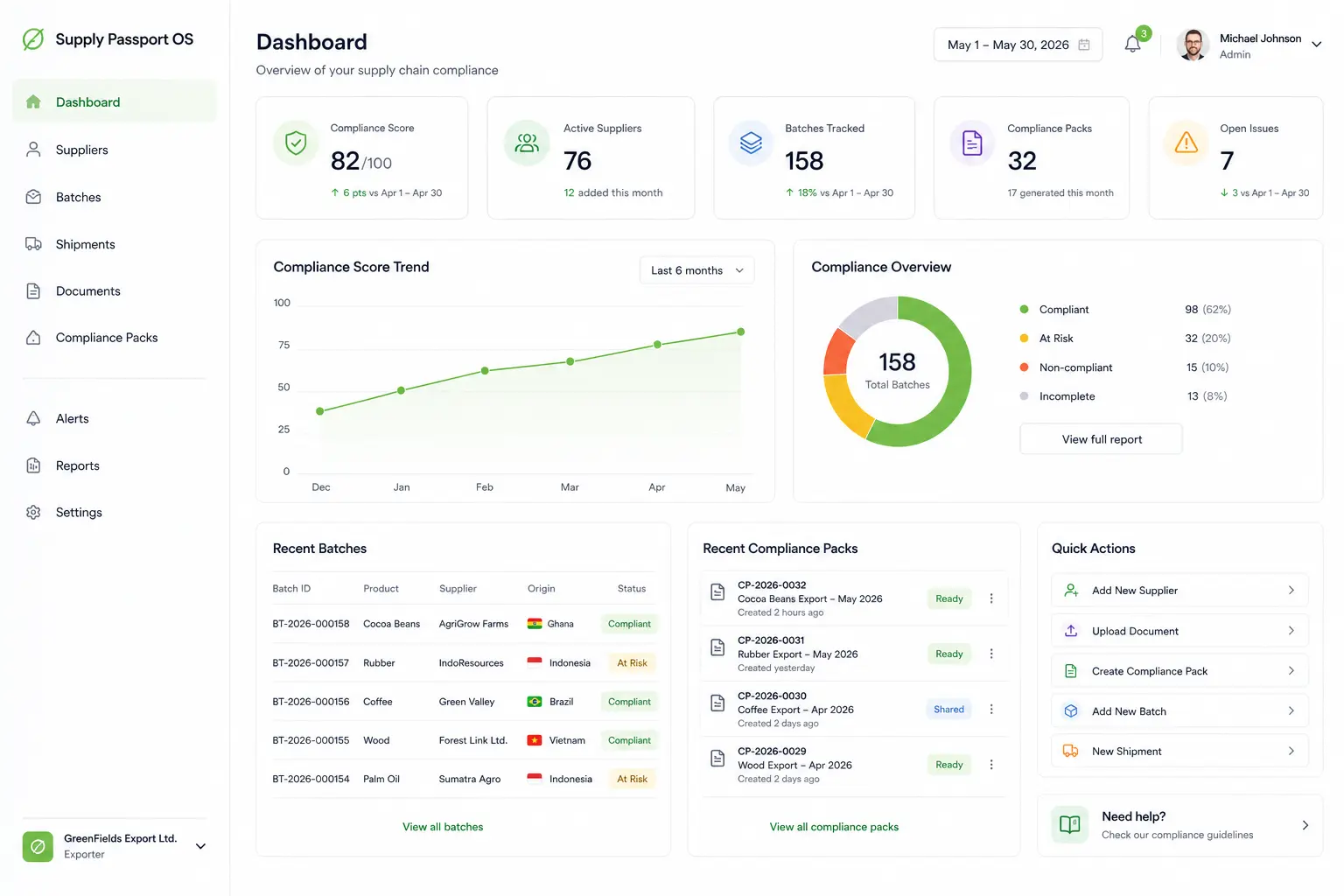
Export compliance system for small suppliers selling products to the European Union with traceability, documents and supplier data
SaaS / Compliance / Export / Supply Chain / AI Automation
pillarEU supply chain compliance software

Export compliance system for EU suppliers: how small exporters can prepare for EUDR, Digital Product Passport and traceability requirements

This article explains why small exporters to the EU need better systems for supplier data, traceability, geolocation, document management and compliance reporting as European regulations increasingly require proof, not declarations.

EUDRDigital Product PassportTraceability
Topic clusters

These clusters show how articles in this section connect with the broader Softech.app knowledge graph.

compliance-traceability-softwareTraceability SoftwareDigital Product PassportESPRProduct IdentityData CarrierAccess ControlInteroperabilityEUDRSupplier EvidenceBatch LineageGeolocationDue DiligenceCompliance Software

Entity map

The most frequent concepts help users and AI systems understand the semantic scope of this page.

Supply Passport OS×3batch×2Digital Product Passport×2EUDR×2Compliance workflow×1data carrier×1due diligence statement×1ESPR×1EUDR Information System×1European Commission×1Geolocation×1item×1model×1plot geolocation×1product identifier×1Regulation (EU) 2024/1781×1supplier×1Supplier data×1Traceability×1

Articles in this section

3 results in this knowledge area

FAQ

Frequently asked questions

How should EUDR traceability differ from a simple supplier document repository?

A traceability system should connect supplier identity, origin evidence, plots, batches, transformations and due-diligence decisions as versioned relationships. Storing PDFs alone does not preserve lineage or explain which evidence supported a decision.

Is Digital Product Passport the same thing as supply-chain traceability?

No. They overlap in identifiers and provenance, but a DPP is a governed product-information surface while traceability models upstream/downstream lineage and evidence. A robust architecture connects the domains without collapsing them into one record.

What data should be immutable in a traceability system?

Historical evidence versions, transformation relationships, submitted references and decision/audit events should be append-oriented. Corrections should create a new version or event rather than silently rewriting the past.

Can software determine EUDR compliance automatically?

Software can validate required evidence, run risk rules and prepare workflows, but legal responsibility and context-sensitive compliance decisions should not be represented as an unconditional model-generated verdict.