AI-native SaaS Architecture: Permissions, Tools and Auditable Product State
A production AI-native SaaS architecture for tenant context, permissions, domain tools, idempotent execution, human approval and auditable product state.
This page groups articles tagged with Product Engineering. It is designed as a semantic topic page: it helps users, Google and AI systems understand how this topic connects with areas such as ai-transformation-operating-model, AI Transformation, Organizational Design.
These articles build the core context and help you quickly understand the most important relationships in this knowledge area.

A production AI-native SaaS architecture for tenant context, permissions, domain tools, idempotent execution, human approval and auditable product state.

A production Voice AI receptionist is a realtime transaction system joining telephony, authoritative booking state, bounded tools, confirmations, recovery and human handoff.

Production AI agents should be bounded decision loops: narrow tools, server-side permissions, durable approvals, retry-safe side effects, budgets, scoped memory and trajectory-level evaluation.
These clusters show how articles in this section connect with the broader Softech.app knowledge graph.
The most frequent concepts help users and AI systems understand the semantic scope of this page.
15 results in this knowledge area

A twenty-person AI team can sometimes create more visible business value than a 400-person IT organization—not because it has better engineers, but because it operates differently.

Production AI automation is a durable trigger-to-outcome workflow with deduplication, deterministic preconditions, structured model decisions, retry-safe actions, human review and auditable recovery.

Production SaaS billing separates provider events from application entitlements and synchronizes subscriptions, payments, access, plan changes and reconciliation through an auditable billing domain.

B2B SaaS authorization should model users, organization memberships, roles, stable permissions, resource policy, service/AI actors and auditable privileged actions—not a single role field.

Multi-tenant SaaS is an end-to-end ownership boundary across requests, database access, queues, caches, billing, integrations, exports and operations—not only a tenant_id column.

A practical architecture guide to production SaaS: organizations, permissions, workflow state, billing, integrations, audit and operations.

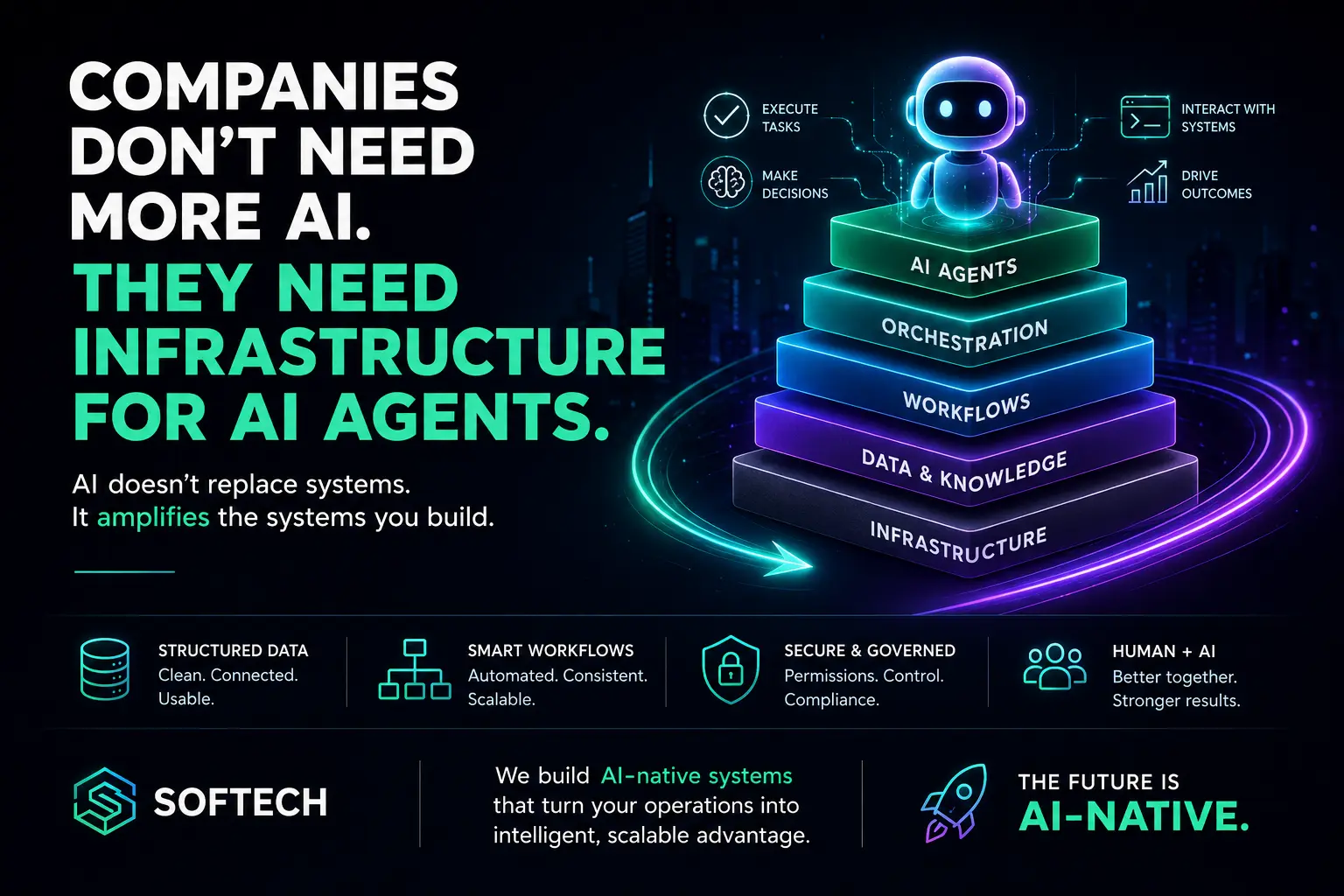
AI agents are becoming the next operational layer of modern organizations. But most companies still lack the infrastructure, workflows and systems required for AI to work effectively at scale.

Many companies have adopted ChatGPT and AI coding tools, but very few have changed how they design, build and operate software. The biggest AI advantage comes not from faster coding but from redesigning the entire operating model.

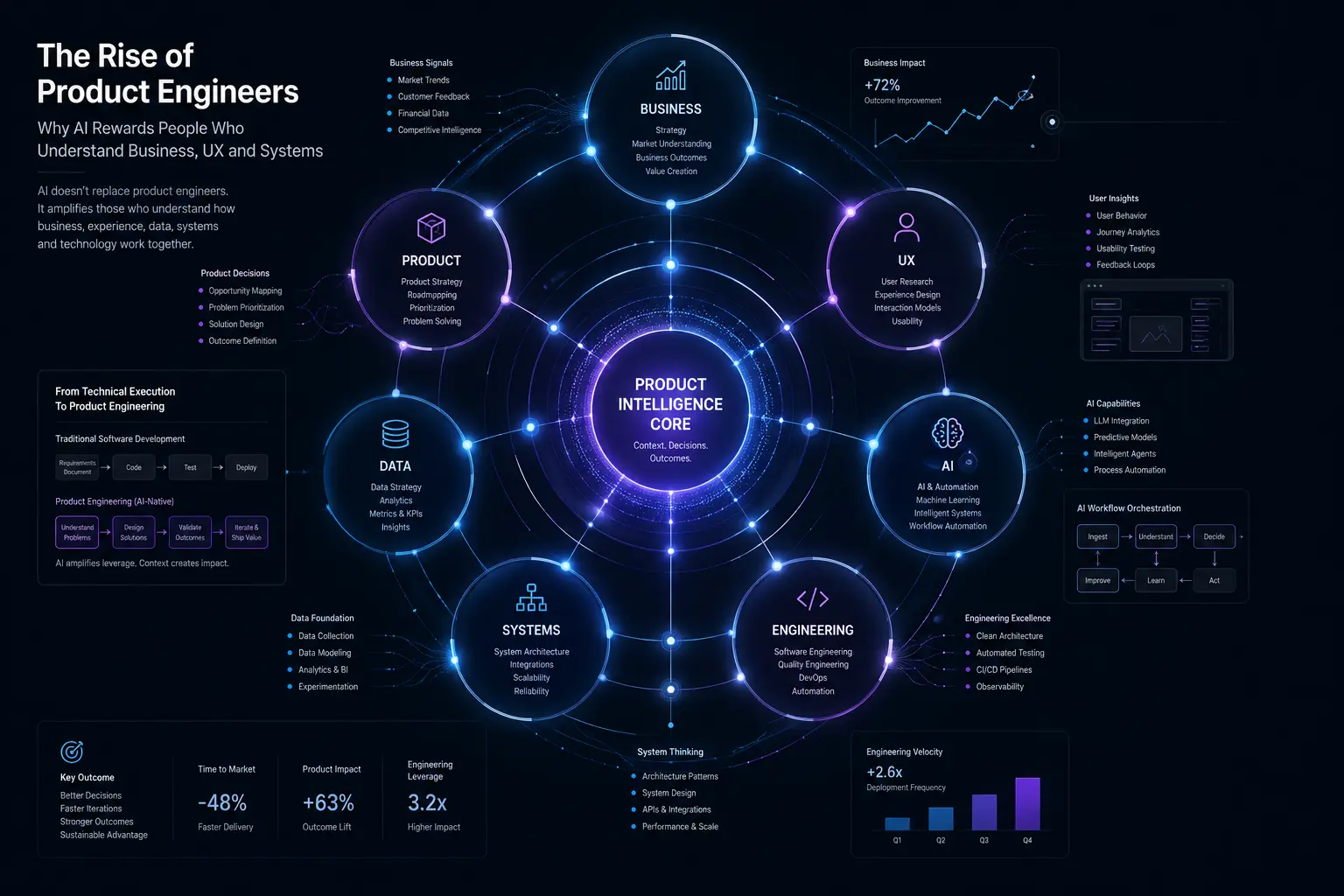
AI makes implementation faster, but it does not decide what should be built. That is why product engineers — people who connect business context, UX, architecture and code — become one of the most important roles in modern software teams.

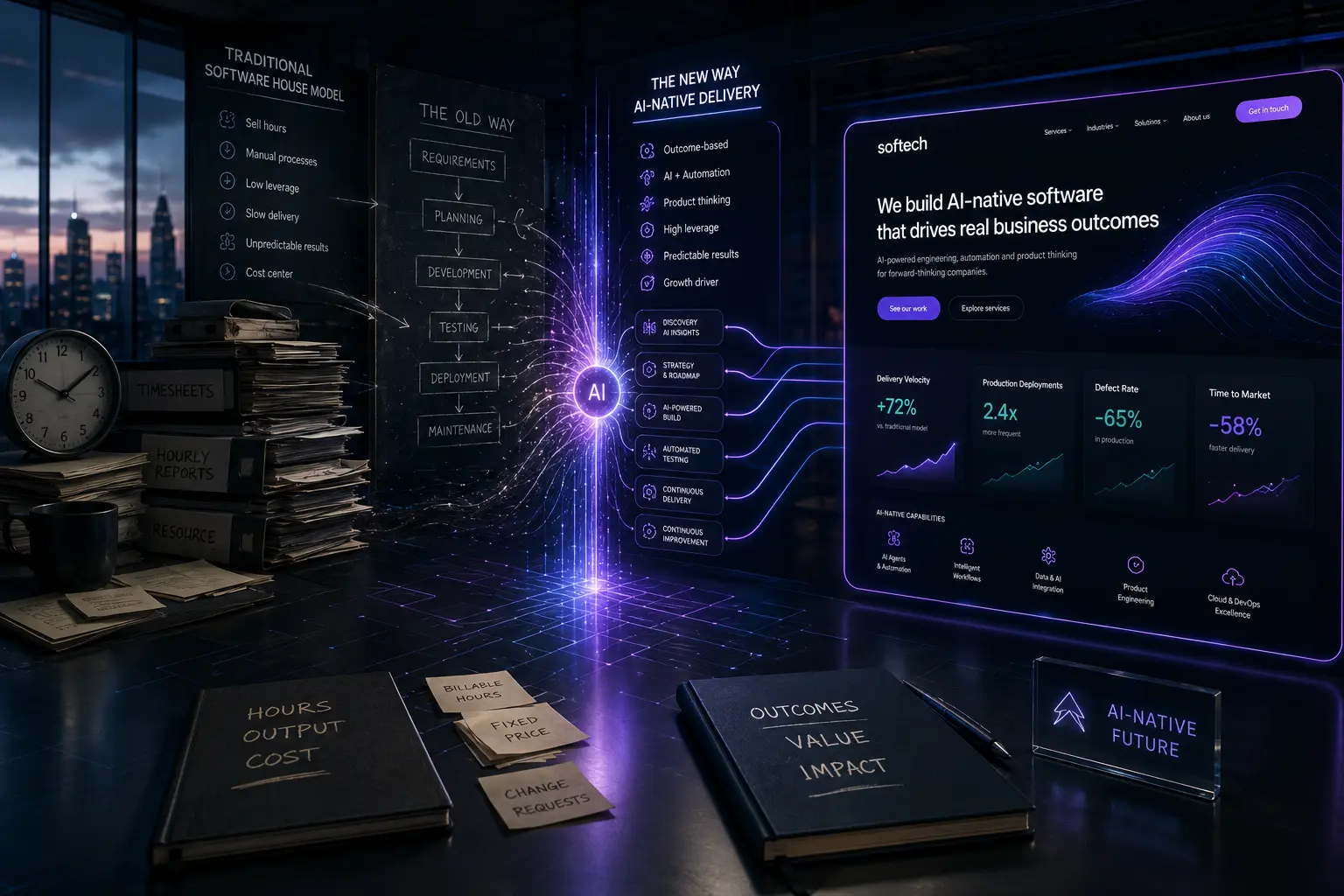
AI does not make software houses irrelevant. It makes low-leverage delivery models irrelevant. The companies that survive will move from selling hours to selling outcomes, domain knowledge, automation and product velocity.

AI is not removing software engineering. It is changing its economics. Smaller AI-native teams can now build faster, closer to business workflows and with much higher leverage than traditional delivery models.

SaaS can help companies start faster, but it does not always support the real operating model of a business. This article explains when an off-the-shelf tool is enough and when custom software becomes an investment in automation, control and long-term advantage.
The Product Engineering topic groups Softech.app articles that help explain a selected area of modern software development, AI, SaaS, automation or digital product building.
A tag page organizes related articles and creates additional semantic context. It helps readers move from a single post to a broader knowledge area.
Yes. Articles tagged with this topic are connected with categories, topic clusters and entities that together form the Softech.app knowledge hub.