Voice AI is a realtime transaction system, not only a conversation layer
A production AI receptionist has to do more than produce natural speech. It must receive a call, understand an intent under imperfect audio conditions, read authoritative business state, execute a bounded action, confirm the result and recover safely when any dependency fails. That makes Voice AI closer to a realtime transaction system than to a standalone chatbot.
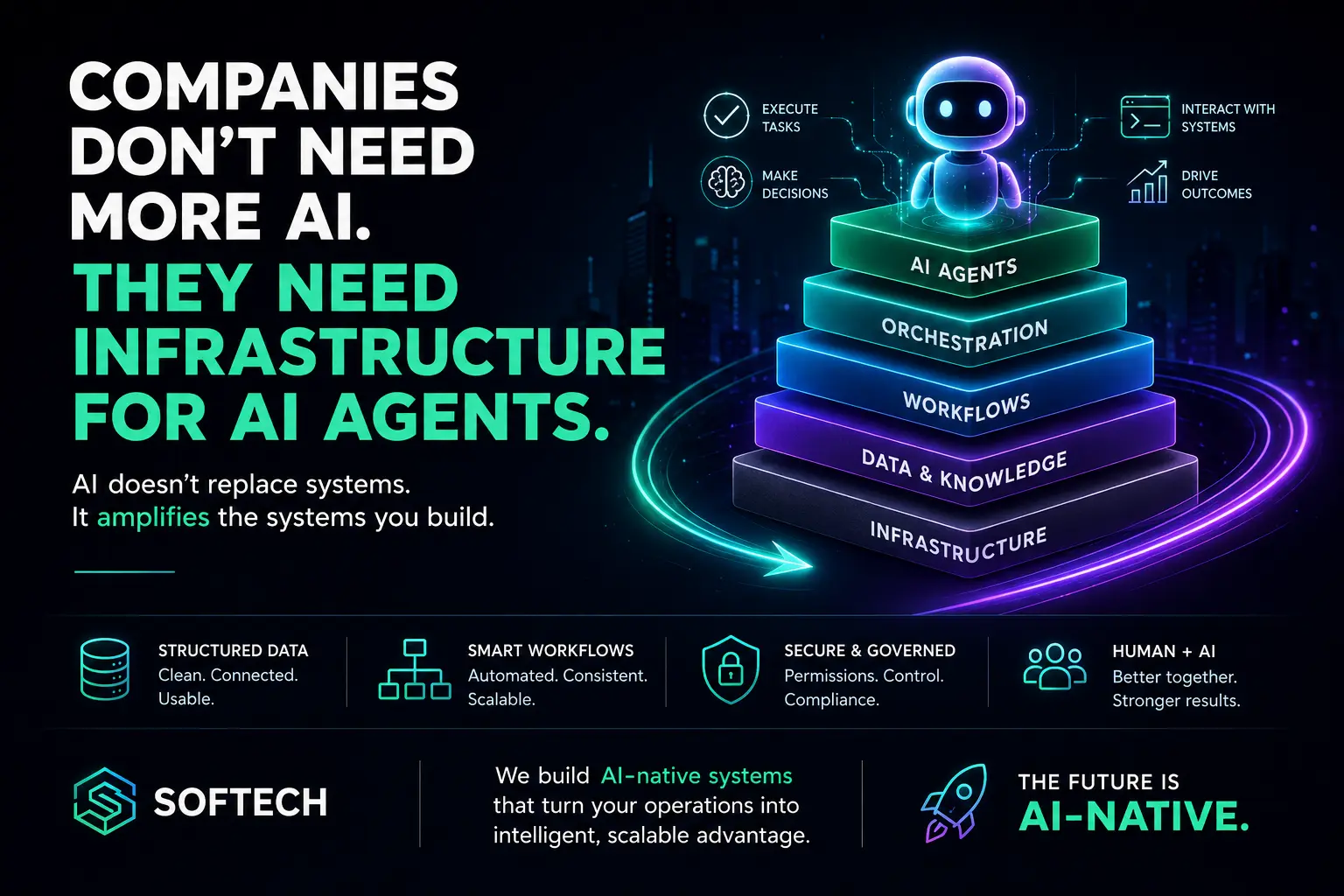
The model should never become the source of truth for room availability, appointment slots, customer records or payment state. Those facts stay in the PMS, booking engine, CRM or operational backend. The voice layer interprets the caller and orchestrates narrow tools around those systems.
A practical call path
| Layer | Responsibility | Typical failure to design for |
|---|---|---|
| Telephony / SIP | Answer, route and terminate the call | Disconnects, transfers, DTMF and carrier errors |
| Realtime audio | Speech input/output and turn detection | Noise, overlap, latency and interruption |
| Conversation state | Intent, collected fields and confirmation state | Missing or contradictory information |
| Tool policy | Allow only approved business operations | Unsafe arguments or out-of-scope requests |
| Business systems | Availability, booking, CRM and payment truth | Timeouts, conflicts and stale state |
| Handoff | Escalate with context when automation stops | Caller forced to repeat the whole conversation |
| Audit | Record tool outcomes and operational result | No evidence why a booking failed |
Latency has to be budgeted end to end
Voice UX degrades when every stage is locally fast but the complete turn is slow. The useful metric is therefore not a single model latency number. We budget the path from end-of-user-turn through transcription or speech understanding, reasoning, tool execution and first meaningful audio response. Tool calls that may take longer should have explicit conversational behaviour: acknowledge the action, keep the caller informed and avoid silent dead air.
Interruption matters as much as speed. A caller may correct a date, speak over the assistant or change the request after a tool has already started. The system must separate what has merely been said from what has already been committed to the backend.
Conversation state and business state are different
Conversation state can contain provisional facts such as “Friday evening” or “two guests”. Business state starts only when authoritative systems confirm availability and a valid command succeeds. This distinction prevents the model from announcing a reservation that never existed.
A robust booking flow normally follows collect → validate → read current availability → present options → confirm critical fields → execute → verify → communicate result. Any step can return a repair state instead of forcing the model to improvise.
Tools should be narrow business commands
Do not expose a general database interface to a voice agent. Prefer commands such as checkAvailability, createBooking, rescheduleBooking or createCallbackRequest. Each command validates tenant, permissions, arguments and current domain state on the server.
Commands that create or modify business state should also be idempotent where retries are plausible. A carrier reconnect, model retry or workflow timeout must not create two reservations. The voice layer can request an operation, but the domain service owns whether that operation is legal and whether it has already happened.
Confirmation should follow business risk
Not every field needs the same ceremony. Reading opening hours can be immediate. Creating a paid booking, changing an appointment or cancelling a reservation needs explicit confirmation of the fields that matter. Confirmation policy should be part of the workflow, not an accidental prompt phrase.
For names, email addresses, booking dates and phone numbers, repair flows are essential. The assistant should be able to repeat only the ambiguous element, offer alternatives and continue from the same state instead of restarting the call.
Human handoff is a deterministic product state
Handoff should be triggered by defined conditions: caller request, repeated low confidence, unsupported intent, sensitive operation, business-system failure, policy boundary or emergency language. The transferred context should include the detected intent, collected structured fields, attempted tools and their outcomes, so a person can continue rather than re-interview the caller.
The best fallback is often not a live transfer. Depending on operating hours it can be a callback task, ticket, SMS confirmation or queue entry. The important property is durable ownership of the next action.
What we learn from production Voice AI work
Softech builds Voice AI around business workflows rather than demo conversations. In our AI hotel booking, medical front-desk automation and beauty booking work, the reusable architecture is the same: authoritative operational data stays outside the model; tools are bounded; escalation is first-class; and every high-value outcome can be traced back to the call and workflow state.
This is also why a production AI Assistant / Voice AI system should be designed together with booking, CRM, notifications and operational ownership rather than as a speech widget added at the end.
Monitoring should measure business completion
Useful Voice AI telemetry goes beyond call duration. Track answer rate, intent coverage, time to first meaningful response, interruption recovery, tool success rate, booking conversion, abandonment point, handoff rate, repeat-call rate and unresolved outcomes. Tool and handoff failures should be attributable to a specific dependency rather than grouped into one generic “AI error”.
A strong production review asks a simple question: for every call, can we explain what the caller wanted, what the system attempted, which authoritative state it read or changed, and who owns the next action if automation did not complete it?
Architecture checklist before launch
- Keep booking, CRM and payment systems authoritative.
- Budget latency across the complete voice-to-tool-to-voice path.
- Separate provisional conversation state from committed business state.
- Expose narrow validated tools rather than generic system access.
- Make retryable write operations idempotent.
- Use explicit confirmation policy for consequential actions.
- Persist handoff context and next-action ownership.
- Measure completed business outcomes, not only conversational quality.