Build the system behind the dashboard.
We design production web products around organizations, permissions, workflows, billing, integrations, audit and operational state. Next.js and NestJS are implementation tools — the product model comes first.
Greenfield SaaS, internal operating systems, transaction platforms and modernization of existing products — with one explicit source of truth for business state.
CONTROL PLANE
One business state.
Many product surfaces.
UI requests actions. Domain rules, billing and audit decide what becomes true.
Tenant scoped
Permission checked
Auditable
Organizations
Workflow
Domain state
Operations
Product model
SaaS + B2B + ops
We separate commercial, operational and transactional system shapes before implementation.
Domain layer
State + workflow
Roles, transitions, entitlements and audit remain explicit outside the UI.
Billing
Fiat + crypto rails
Subscriptions, invoices, Stripe-style billing and USDC/CoinGate can coexist behind one product-owned ledger.
Delivery
Build → operate
Admin, observability, reconciliation and recovery are part of production scope.
Four architecture models
A web product is not one type of system.
A vertical SaaS, internal business operating system, transaction marketplace and legacy modernization program may all use Next.js and NestJS — but their ownership, state and failure modes are different.
MODEL A
Multi-tenant SaaS platform
A product sold to multiple organizations with isolated data, memberships, role models, plans, entitlements and repeatable onboarding.
BEST FOR
Vertical SaaS, B2B platforms, self-service portals and software sold per organization, location or account.
MODEL B
Business operating system
Software that replaces spreadsheets, email chains and disconnected SaaS tools with one operational model for work, documents, approvals and reporting.
BEST FOR
Operations, field service, workforce, rental, logistics, compliance-heavy workflows and internal process automation.
MODEL C
Marketplace & transaction platform
A system coordinating supply, demand, orders, payments, communication, fulfilment and operations across several participant roles.
BEST FOR
Marketplaces, booking, delivery, rental, procurement and products where money and state move between parties.
MODEL D
Existing platform modernization
A staged migration that identifies domain boundaries and replaces fragile modules without requiring a risky all-at-once rewrite.
BEST FOR
Legacy SaaS, growing monoliths, outdated frontends, unstable integrations and products blocked by accumulated technical debt.
We choose the domain and operating model first. Frameworks, databases and providers follow the product constraints.
Product topology
The dashboard is not the product.
The visible interface sits on top of identity, business state, permissions, billing and integrations. We make those layers explicit so the product remains operable as customers, teams and workflows grow.
01
Organizations & identity
Customers, users, memberships, invitations and tenant context.
02
Authorization
Roles, permissions, resource ownership and policy checks.
03
Domain state
Orders, assets, cases, documents and lifecycle invariants.
04
Workflow
Transitions, approvals, deadlines, automated actions and exceptions.
05
Billing & entitlements
Plans, usage, invoices, payment rails and product access.
06
Integrations & operations
Events, queues, external systems, logs, audit and operator tooling.
SaaS foundations
The hard part is keeping ownership and state explicit.
We design tenancy, authorization, workflow and audit as first-class product concepts rather than scattered checks inside controllers and screens.
TENANCY
Multi-tenancy from ownership
Start with organizations, memberships and resource ownership before deciding how tenant isolation is implemented in storage.
Organization / workspace model
Membership lifecycle
Tenant-scoped resources
Isolation strategy
White-label configuration
AUTHZ
Authentication ≠ authorization
Signing in proves identity. Product rules still need explicit decisions about who may act on which resource and in what organization.
Role model
Permission matrix
Resource ownership
Admin escalation
SSO-ready boundaries
WORKFLOW
Business state is more than CRUD
Important records move through controlled states with transition rules, deadlines, approvals and side effects.
State machines
Transition guards
Automated actions
Manual review
SLA / due dates
AUDIT
History explains the current state
An audit trail records who changed what, when, from which state and through which system path.
Actor + action
Previous/new state
Correlation IDs
Integration source
Operator search
CRUD is easy. Business state is the product.
A production workflow needs valid transitions, permission checks and exception paths. The UI can request a transition; the domain decides whether it is allowed.
→
→
→
→
→
Current state tells you what is true. Audit history tells you how it became true.
The same model supports customer support, compliance, debugging, finance and controlled AI actions because the decision path remains reconstructable.
actor
action
resource
previous_state
new_state
timestamp
correlation_id
source
Billing & financial state
Billing is a product state machine — not a payment button.
Plans, entitlements, invoices, payment methods and settlement should remain separate concepts. This lets the product support subscriptions, one-off B2B invoices and additional payment rails without coupling access rules to one provider.
Subscription lifecycle
→
→
→
→
→
→
→
Product-owned billing model
PLAN
Plan
Commercial packaging and pricing reference.
ENTITLE
Entitlements
Which product capabilities the customer may use.
USAGE
Usage
Meters or counters when pricing depends on consumption.
INVOICE
Invoice / obligation
What is owed, in which commercial currency and why.
PAYMENT
Payment
Evidence that an obligation was satisfied through a selected rail.
LEDGER
Ledger & reconciliation
Product and finance history independent from provider callbacks.
One billing model can support more than one payment rail.
We keep subscription and entitlement logic in the SaaS domain, then integrate the payment mechanism that matches the customer and market — including existing Softech crypto payment capabilities.
FIAT / BILLING
Cards, bank and subscription billing
Provider-managed recurring billing, invoicing, dunning or one-off checkout connected to product-owned plan and entitlement state.
• Subscriptions
• Invoices
• Proration
• Dunning
• Customer portal
USDC / COINGATE
USDC & CoinGate payment integration
Accept stablecoin payment for a SaaS invoice or order through a managed crypto provider while keeping commercial price, entitlement and reconciliation in the product.
• USDC checkout
• CoinGate orders
• Idempotent callbacks
• Settlement
• Reconciliation
ON-CHAIN / CUSTOM
Custom on-chain payment rail
When blockchain payment is native product state, dedicated addresses, confirmation logic, internal ledger and treasury can be designed as a custom rail.
• Dedicated addresses
• Confirmation/finality
• Internal ledger
• Treasury
• Exceptions
Softech designs the SaaS billing, entitlement, orchestration and reconciliation layer. Where regulated crypto-asset services, custody or exchange are required, those functions remain with the selected authorised provider or customer-approved regulated architecture.
Distributed product engineering
Integrations fail. Realtime races. AI needs boundaries.
Production SaaS has to remain correct when external systems are slow, webhooks repeat, jobs retry, users act concurrently or AI proposes an action. We design those conditions instead of assuming the happy path.
INTEGRATIONS
Webhooks, queues and idempotency
An integration is a failure-handling problem, not an API call.
• Verify and persist events
• Idempotency keys
• Queues / retries
• Dead-letter handling
• Reconciliation jobs
REALTIME
Realtime operational state
Live status is useful only when concurrent actions still resolve against authoritative domain rules.
• WebSockets / events
• Presence / live status
• Optimistic UI
• Conflict rules
• Operational dashboards
OBSERVE
Observability & operator control
Support teams need a path from customer to exact workflow, provider event and system trace.
• Structured logs
• Correlation IDs
• Metrics / alerts
• Admin search
• Recovery runbooks
SECURITY
Security in product boundaries
Least privilege and domain authorization are applied before data leaves the trusted boundary or an automated tool acts.
• Tenant boundaries
• RBAC / policy
• Secrets
• Rate limits
• Audit
AI-native does not mean adding a chatbot.
AI becomes useful when it works inside the same identity, permission and workflow model as the rest of the product. Context and tools should be constrained by the user and organization that initiated the action.
→
→
→
→
→
→
→
→
The model may classify, summarize or propose an action. Authorization, state transitions, financial rules and audit remain deterministic product responsibilities.
Production proof
Evidence from systems that have to keep operating after launch.
We prefer proof that demonstrates domain architecture, workflow and operations — not screenshots of a dashboard detached from the system behind it.
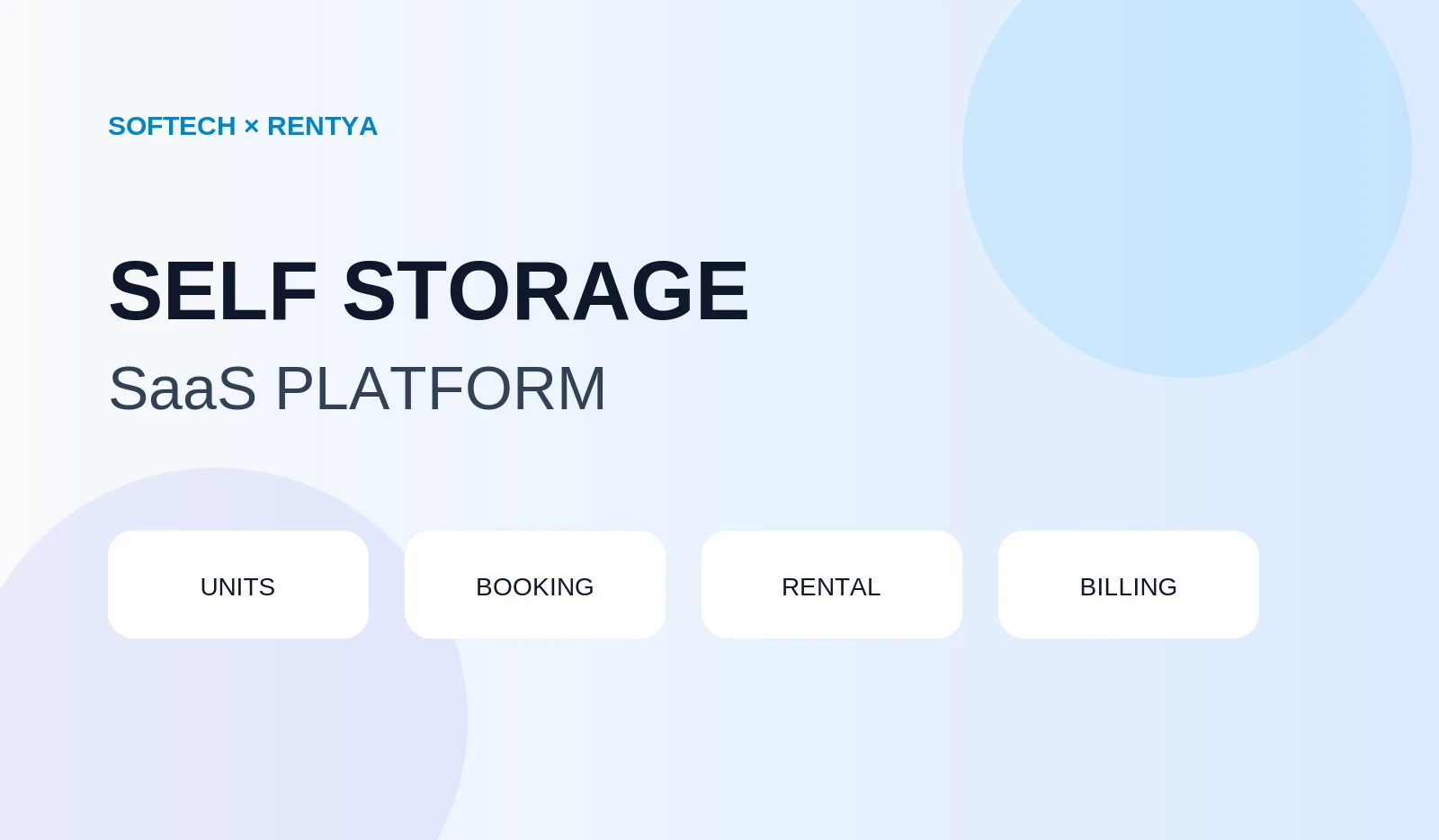
Rentya — self-storage SaaS platform
A reusable SaaS core for operators, facilities and storage units, carrying a booking through availability, documents, payment and active rental while supporting tenant self-service and configurable operating models.
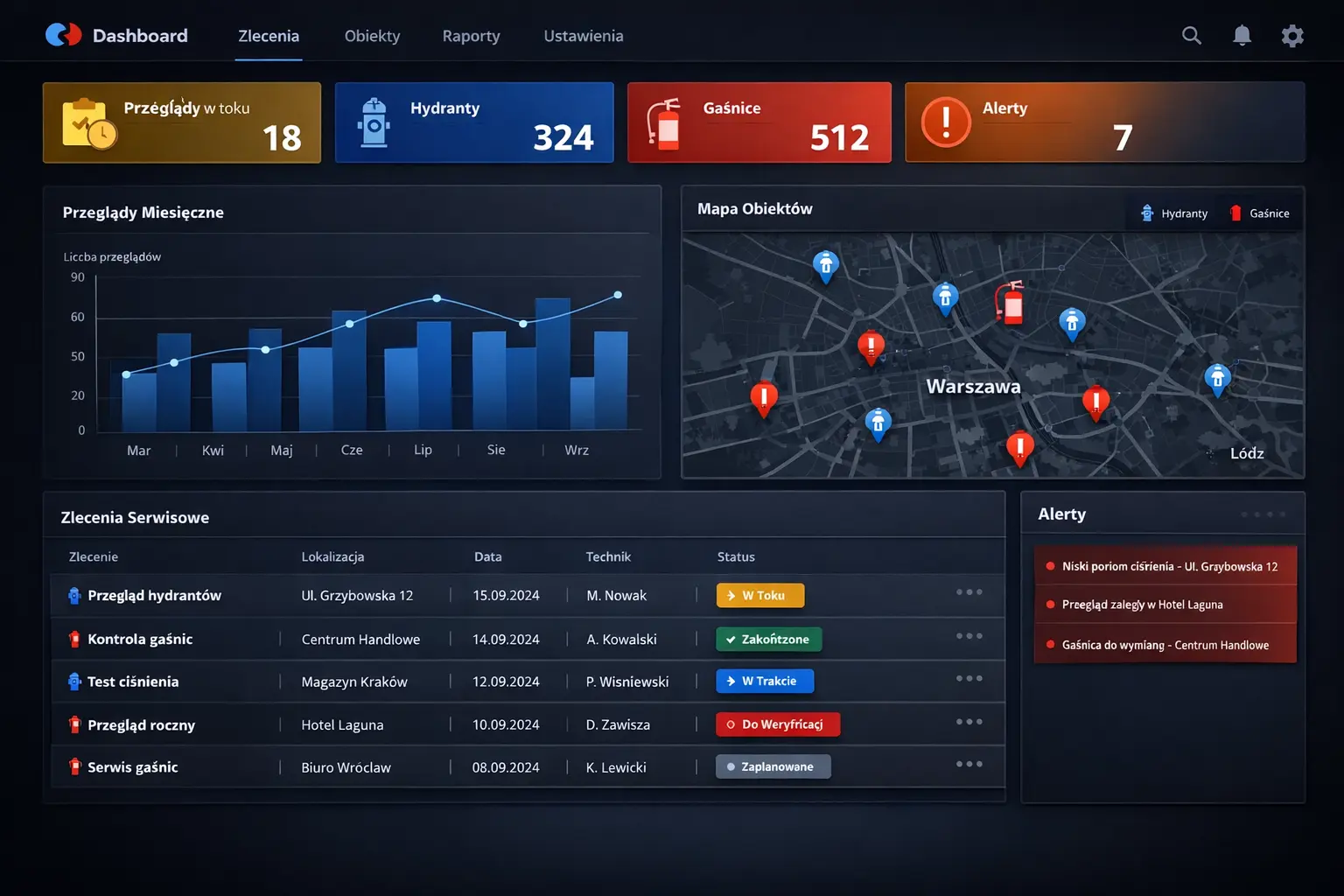
VERTICAL SAAS / FIELD
TECHPRES.app
A commercial fire-safety service SaaS with customers, sites, assets, service orders, field inspections, measurements, PDF protocols and device history.
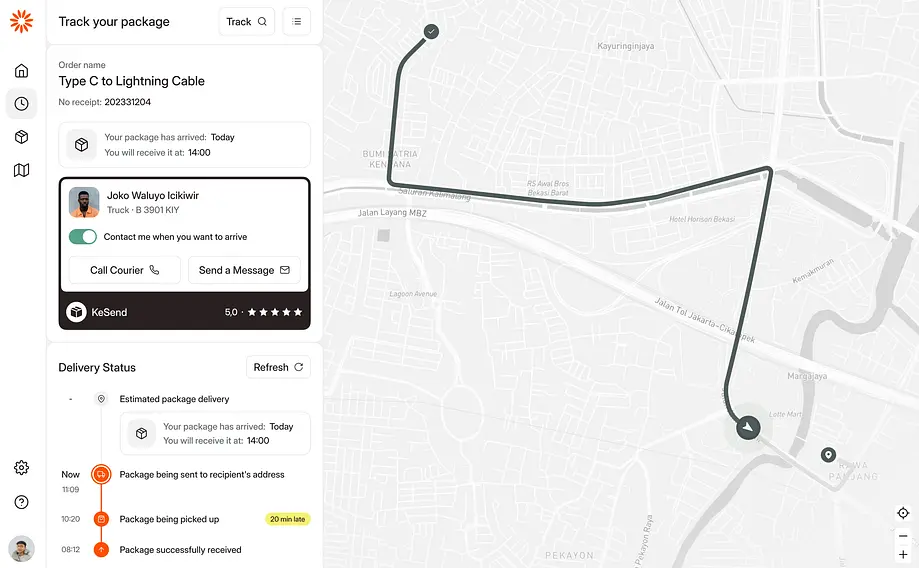
REALTIME / OPERATIONS
Foodeli
A multi-channel last-mile operations platform connecting central administration, dispatch, partner channels and courier workflows through one order model.
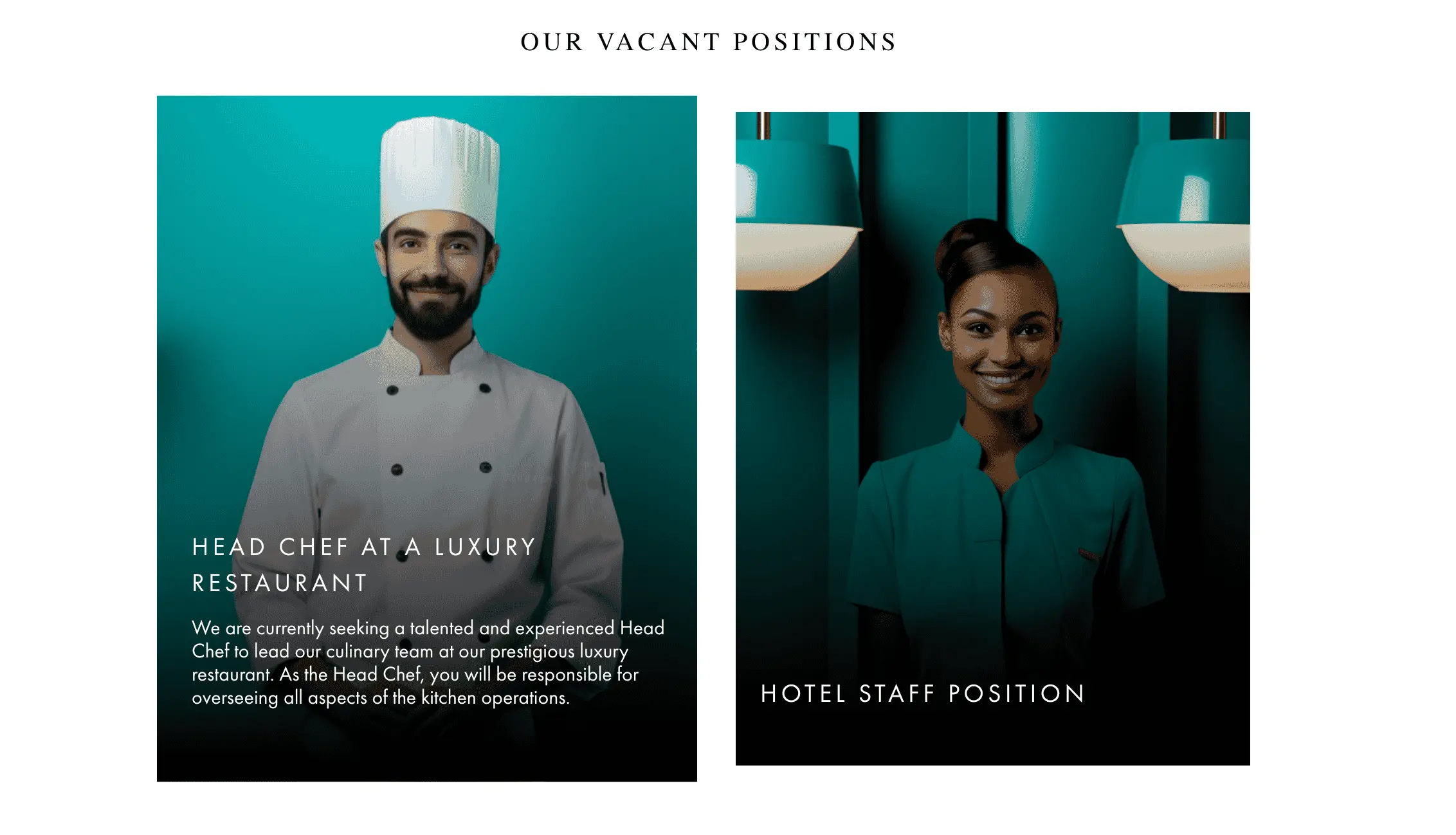
WORKFORCE / SETTLEMENT
Hospitality Staff Services
Operations panel, worker mobile app, scheduling, availability, check-in/out, timesheets, documents and multi-cycle settlement in one workforce workflow.
Built by Softech / Product Lab
We use the same architecture principles in products we build ourselves.
OrbitOS, SignFlow and Storage Software are useful proof because the team making architecture decisions also has to live with product evolution, workflows and operations after release.
Softech OrbitOS
AI-native Business OS for operational workflows, automation and management context.
SignFlow
Document workflow, signing status, reminders, archive, roles and audit trail.
Storage Software
Self-storage management product with availability, rentals, customer workflows and operational tooling.
Commercial authority
Start from the system problem you already know you have.
The core Web Application & SaaS Product Engineering service remains broad. These focused paths are for teams with a clear commercial or modernization constraint.
SAAS / PRODUCT
SaaS Development
Multi-tenant B2B SaaS with organizations, roles, subscriptions, entitlements, workflows and production operations.
OPS / WORKFLOW
Business Operations Software
Replace spreadsheets, email and fragmented tools with a domain system for workflows, approvals, documents and reporting.
COMPLIANCE / TRACE
Compliance & Traceability Software
Build supplier, batch, product, evidence and audit workflows for regulated supply-chain and product-information requirements.
FIRE / INSPECTION
Fire Safety & Inspection Software
Build asset, inspection, technician, measurement and protocol workflows for fire-protection and technical service operations.
MODERNIZE / MIGRATE
SaaS Modernization
Audit and evolve a working legacy platform through staged domain extraction, module replacement and safer migration.
Authority layer
Architecture guides for teams making production SaaS decisions.
Use these guides to evaluate product topology, tenant isolation, authorization and billing before committing to implementation details.
PILLAR / SAAS
How to Build a Production SaaS Platform
A complete guide to organizations, domain state, workflows, billing, integrations, audit and operations.
TENANCY / DATA
Multi-tenant SaaS Architecture
Choose organization, data ownership and isolation models without reducing tenancy to one database column.
AUTHZ / B2B
RBAC & Permissions for B2B SaaS
Model memberships, roles, permissions and resource ownership across customer organizations.
BILLING / ACCESS
SaaS Billing & Entitlements
Separate plans, entitlements, invoices and payment rails — including fiat and stablecoin settlement paths.
AI / PRODUCT
AI-native SaaS Architecture
Embed AI inside tenant-aware permissions, product state, bounded tools and audit without letting the model bypass domain rules.
FAQ
Questions we resolve before production implementation.
The exact architecture depends on customer boundaries, workflows, financial state and the existing product — not on a generic SaaS template.
Yes. We model organizations, memberships, authorization, tenant-scoped data, plan/entitlement state, billing, workflows and operator tooling as explicit parts of the product architecture.
Yes. We integrate payment providers while keeping plans, entitlements, invoices and accepted product state in the application domain so access rules are not coupled to one provider webhook.
Yes. The same product-owned invoice and entitlement model can integrate USDC through a managed provider such as CoinGate or through a custom on-chain rail where the product requires it. We keep payment, ledger and reconciliation boundaries explicit.
Yes. We normally start with an architecture and risk map, identify domain boundaries and replace modules incrementally where that is safer than an all-at-once rewrite.
Yes. Internal operating systems often use the same workflow, authorization, audit, integration and reporting principles even when there is no subscription model.
If the business hypothesis or core workflow is still unvalidated, the Minimum Value Product service is a better starting point. Web & SaaS Product Engineering is optimized for products where production architecture is already the main problem to solve.
Architecture discovery
What are you actually building?
Choose the closest operating model. We will use it as context for architecture discovery instead of starting with a blank contact form.
B2B SaaS
Organizations, subscriptions, roles, workflows and tenant data.
Business Operating System
Internal workflows, documents, approvals, reporting and automation.
Transaction Platform
Marketplace, booking, orders, payments and settlement.
Existing Platform
Architecture audit, migration and controlled modernization.
MVP / validate first
Validate the business hypothesis before investing in production SaaS architecture.